
Wedding seating is one of those tasks that feels deceptively small until you sit down to do it. A hundred-plus guests, a dozen tables, a handful of conflicts to navigate, and a deadline that arrives faster than expected. The good news is that the decision tree is straightforward once you understand the two tools that solve it: escort cards and seating charts.
This guide covers what each one actually is, when to use which, dozens of design ideas for both, and the etiquette and planning tips that prevent the most common wedding seating mistakes.
What Are Escort Cards?
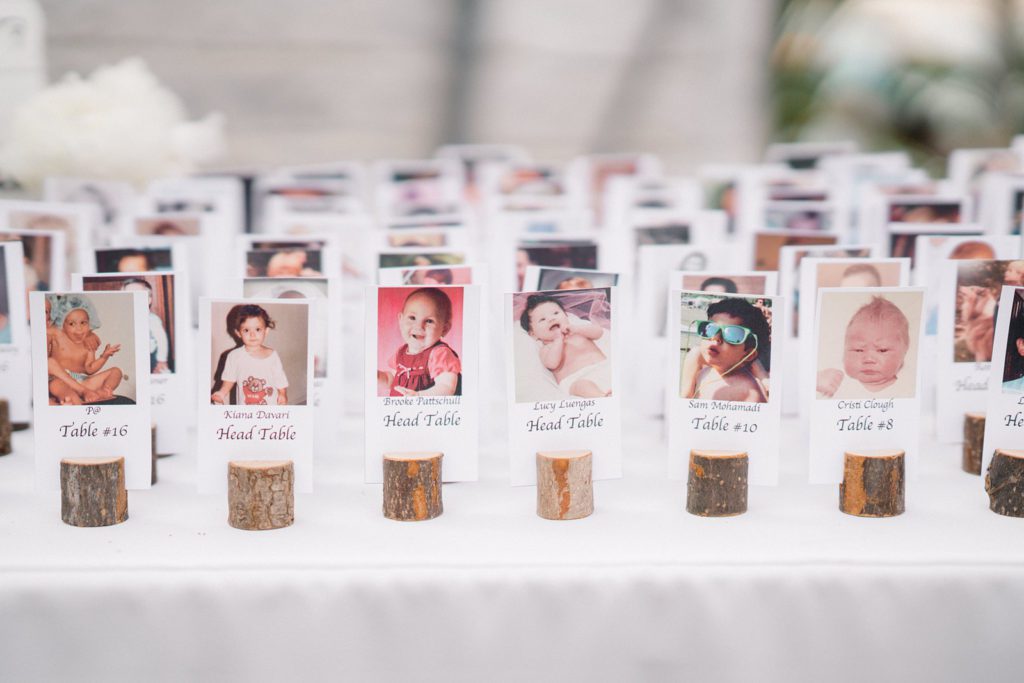
Escort cards are small individual cards displayed at the entrance to the reception, typically during cocktail hour. Each card has a guest’s name and their assigned table number (sometimes both names if a couple). Guests pick up their card on the way to dinner and use it to find their table.
The key features:
- One card per guest (or one per couple, depending on style)
- Displayed in a way that lets guests find their name quickly (typically alphabetical)
- Tell the guest which table to sit at, but not which specific seat
- Often double as decorative elements, since they sit on display through cocktail hour
- Many couples have guests take the card with them to the table

What Is a Wedding Seating Chart?
A seating chart is a single visual display showing every guest’s name and assigned table on one piece. Guests find their name on the chart and walk to their table directly. Charts typically sit at the reception entrance like escort cards do but consolidate everyone’s information into one display rather than individual cards.
Common formats:
- Framed printed chart with table sections (often the most readable)
- Acrylic or mirror with hand-lettered names
- Chalkboard with calligraphy
- Floral installation with names attached to fabric or paper
- Window pane or wooden frame layouts
The chart shows table assignments but not specific seats at the table (place cards do that, which we’ll cover separately).
Escort Cards vs. Seating Chart: Which Should You Use?
You only need one. Having both creates redundant information and visual clutter at the reception entrance.
The right choice depends on a few factors:
- Choose escort cards if: You want a take-away element guests carry to the table. You have decorative budget for individual card design. You want to use the cards to double as meal selection indicators. Your guest count is under 200 and the display table has room for individual cards.
- Choose a seating chart if: Your guest count is over 200 and individual cards would be overwhelming to lay out. You want a single clean visual statement at the entrance. You prefer to spend the budget on one beautiful display rather than 150+ individual pieces. You want the chart to double as a photo backdrop.
- Either works well if: You have 100 to 200 guests and either format fits the venue and aesthetic. This is the bulk of weddings, so the decision often comes down to which design moves you visually.
Should You Have a Seating Chart at Your Wedding?
The short answer is yes, in almost all cases. Open seating sounds appealing in concept but creates problems in execution.
What happens at open-seating weddings:
- Chairs and place settings get stolen between tables. Each table is designed for a specific guest count based on its size. Once guests start moving chairs to fit their preferred grouping, other tables end up half-empty and overcrowded ones squeeze guests uncomfortably.
- Whole-room photos look sparse. The patchwork of full and empty seats reads visibly in wide photography shots, which is why photographers often avoid full-room shots at open-seating receptions.
- Guests cluster into cliques. Open seating produces predictable behavior: people sit with who they already know. The wedding’s mixing-and-mingling intent gets undermined the moment guests can self-select.
- Solo guests have an awkward moment. Anyone arriving alone or with one other person has to scan the room, find seats, and join a table of strangers. The kindness of pre-assigned seating removes that stress entirely.
- Family dynamics get tested. Divorced parents, estranged relatives, and competing in-law factions all sit where the math of open seating puts them, not where the couple would have intentionally placed them.
Some couples successfully run open seating, but they typically do it with intentional structure: clearly designated “family” and “friends” zones, named tables grouped by relationship (groom’s college friends, bride’s coworkers), or open seating only at smaller weddings under 50 guests where the math works out naturally.
Wedding Escort Card Display Ideas
Escort cards offer one of the highest design-impact opportunities of the wedding, because they greet every guest immediately on arrival.
Traditional Card Tables
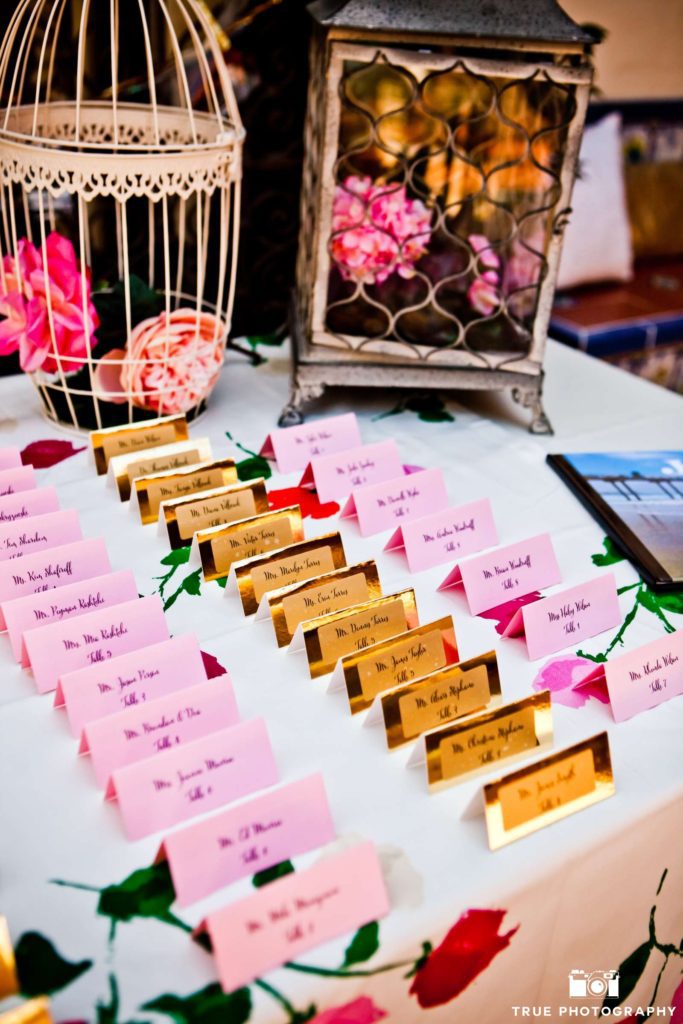
Individual cards laid out alphabetically on a single table with a tablecloth or runner. Often paired with a sign that reads “Find your seat” or similar. The classic format. Works for any aesthetic.
Hanging Escort Card Displays
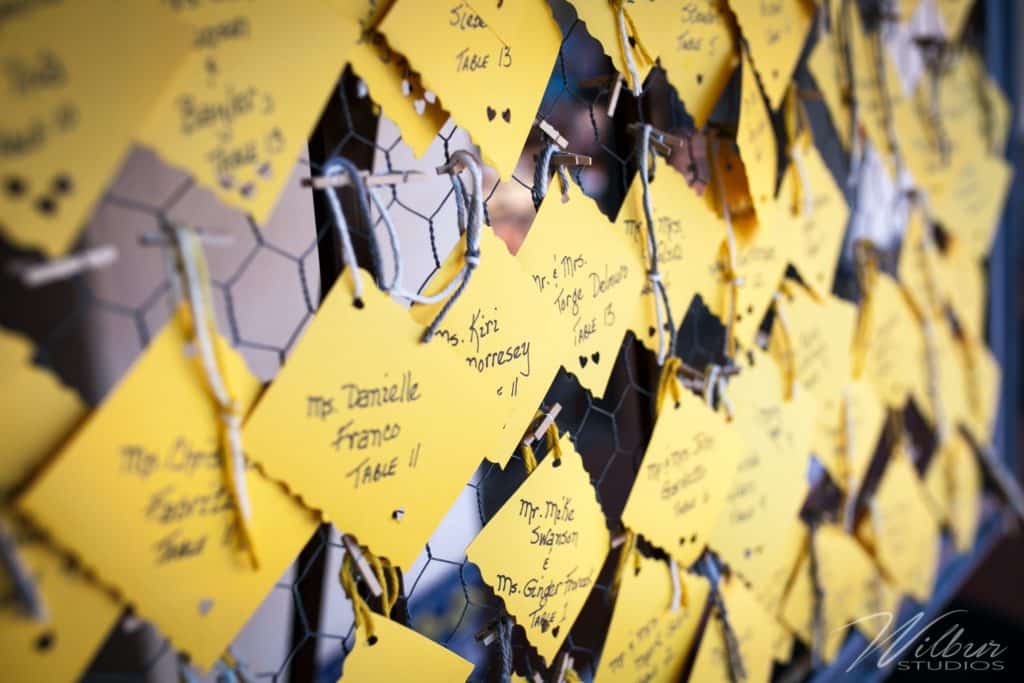
Cards clipped or tied to a vertical structure (a wooden frame, a wall of ribbons, a piece of driftwood, a window frame). Reads more modern than a flat table layout. Especially photogenic.
Themed and Personal Displays
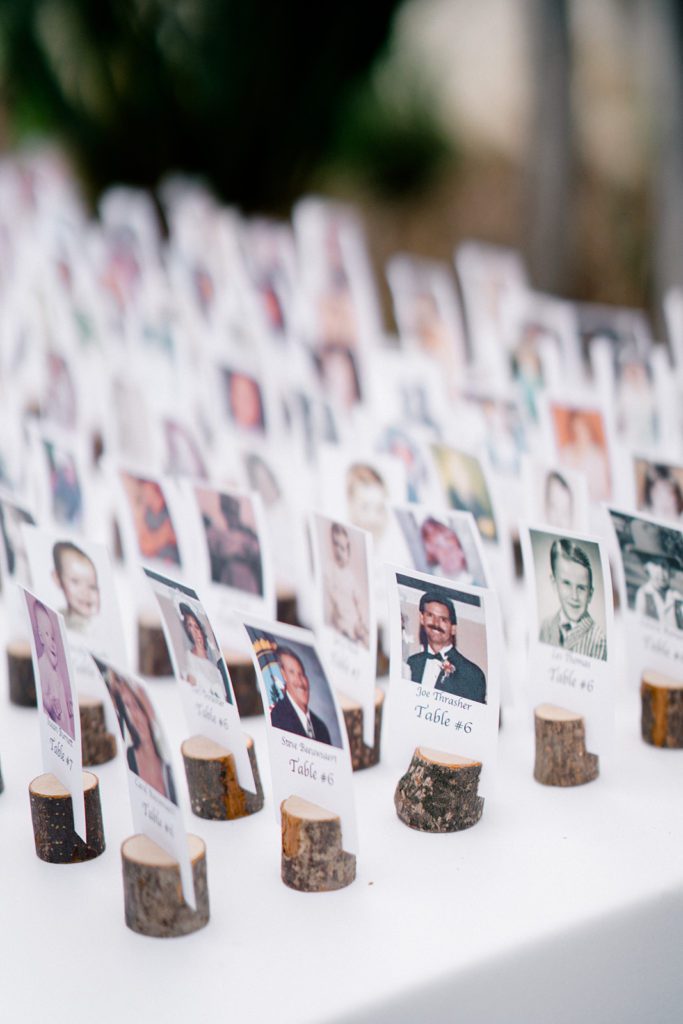
- Corkboard with photos. Each card pinned next to a photo of the guest with the couple. Sentimental and slow to read, so works best for smaller weddings.
- Mirror with calligraphy. Names written directly on a large vintage mirror in white calligraphy ink. Doubles as decor.
- Map or destination theme. Cards arranged on a world map, with each guest’s name pinned to their hometown.
- Wine cork or champagne tag. Names written on individual wine corks or champagne tags clipped to a display.
- Greenery wall. Cards tucked into a wall of fresh eucalyptus or moss.
Edible and Take-Home Escort Cards
- Cookie escort cards. Decorated sugar cookies with each guest’s name and table number iced on top. Guests take and eat at the table.
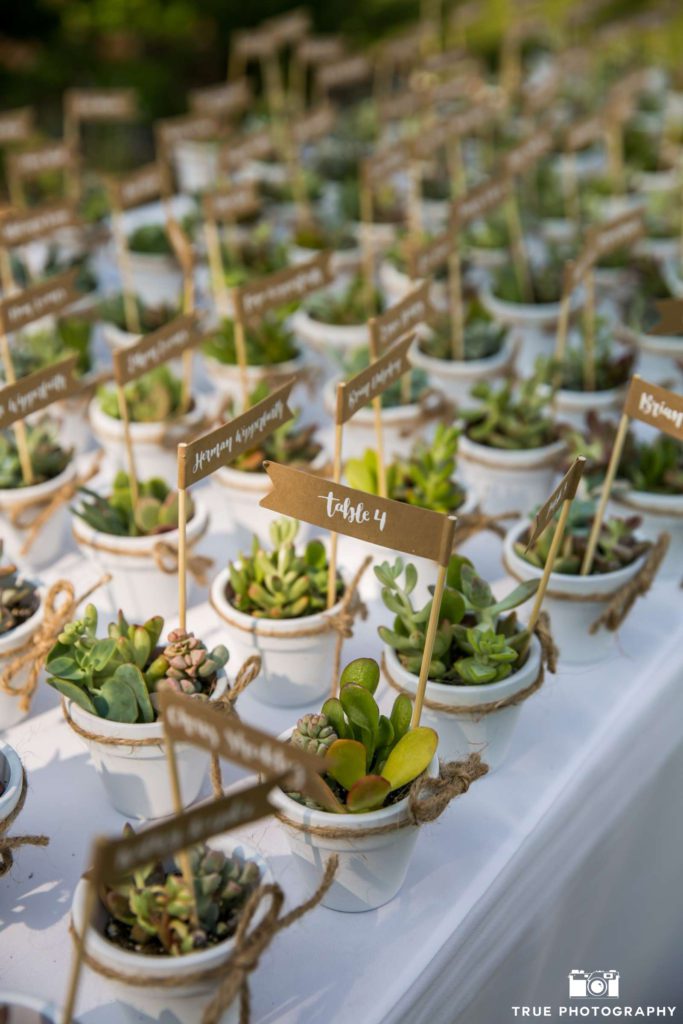
- Plant escort cards. Small potted succulents or herbs with a name tag tied to each. Double as favor and seating assignment.
- Wine bottle tags. Mini wine bottles with a name tag, doubling as escort card and welcome gift.
- Honey jar or jam jar tags. Small artisan products with personalized labels.
Meal Selection Escort Cards
If your dinner is plated (not buffet), the escort card can also signal to servers which meal each guest selected. Common methods:
- Color-coded card edges. A small color band on the card edge (red for beef, yellow for chicken, green for vegetarian) tells servers without guests realizing.
- Symbol icons. A small printed icon (cow, chicken, leaf) on the card.
- Embossed initials. A small B/C/V monogram on the card.
- Decorative ribbon. Different colored ribbons tied around each card.
Servers are briefed on the system during pre-event setup, so they read the cards as they deliver plates without disrupting the guest experience.
Wedding Seating Chart Design Ideas
The chart is the alternative to escort cards. A few designs that consistently land:
Acrylic and Glass Charts
Names hand-lettered on clear acrylic or framed glass. Modern, photogenic, and the lettering style sets the wedding’s overall typography mood.
Mirror Charts
Vintage or antique mirror with names hand-painted in white or gold. Pairs well with classic and Old Hollywood aesthetics. Often the most photographed decoration element of the wedding.
Chalkboard Charts
Large framed chalkboard with calligraphy chalk lettering. Works for rustic, farm, and casual aesthetics. Easy to update if guest counts shift in the final week.
Floral or Greenery Installation Charts
A panel of greenery or florals with name cards tucked or pinned throughout. Reads as decoration first and chart second. Best for venues where the chart sits as a focal point.
Window Pane and Wooden Frame Charts
Vintage window panes (with names painted on the glass) or wooden frames with cards inside each pane. Adds architectural interest to the display.
Printed Charts
A high-quality printed and matted chart in a frame. The most efficient and readable option. Best when paired with strong typography and a clean layout.
How to Plan Wedding Seating Arrangements
Seating planning is methodical work. A repeatable process makes it much faster than starting from a blank list.
Start Three Weeks Out
Begin once the RSVP deadline has passed and you have a near-final guest count. Three weeks gives you time to handle last-minute additions, sit with the arrangement for a day or two before committing, and adjust without panic.
Group Guests Into Categories First
Before assigning tables, sort guests into rough groups: bride’s family, groom’s family, bride’s college friends, groom’s college friends, work colleagues, neighbors, family friends, and any other natural clusters. Most table assignments fall out of these groups.
Assign Tables by Group, Not Individuals
Work table by table rather than guest by guest. Decide who anchors each table first, then fill the table with people who connect to that anchor. This is faster than trying to optimize every individual placement.
Handle the Conflicts Last
Save the tricky placements (divorced parents, estranged relatives, exes attending with new partners) for the end, after the easy tables are set. By then you’ll have a clearer sense of which tables have buffer room.
Display Names Alphabetically (For Escort Cards)
If using escort cards, arrange them alphabetically by last name on the display table. Organizing by table number makes guests hunt longer and creates bottlenecks at the display.
Make the Setup Job Foolproof
Whoever sets up the escort card or seating chart display has a margin for error. The easier the layout (clear sections, big lettering, obvious organization), the lower the chance of misplacement. Test the layout the day before with someone unfamiliar with the chart.
Common Wedding Seating Chart Mistakes
- Procrastinating until the week before. Last-minute seating produces sloppy choices and forgotten guests. Start three weeks out.
- Forgetting plus-ones. Plus-ones who confirmed get assigned seats. Plus-ones whose names you don’t know yet still need a seat reserved.
- Mixing strangers without a connection thread. Random mixing produces dead conversations. Even at a “singles table,” guests should share at least one connection point (age range, work field, mutual friend).
- Putting all the kids together. A dedicated kids’ table is fine, but parents typically prefer sitting near their children, not having them three tables away.
- Sitting feuding family members together. If two people are not on speaking terms, they go to different tables, ideally with sight lines that do not face each other.
- Skipping the seating chart for couples and immediate family. The couple, parents, and grandparents need clearly designated seats at clearly designated tables. Leaving these to chance creates the most visible awkwardness.
- Last-minute changes that do not propagate. If you move a guest two days before the wedding, update the escort card, the seating chart, the meal-coordination list, and the venue coordinator’s copy. Missing one of these creates the day-of mismatch.
- Using table numbers that confuse the meal service. If you skip table 4 and table 13 for superstition, the catering team needs to know. Otherwise plates intended for “table 4” arrive at table 5.
Escort Card and Seating Chart Etiquette
A few etiquette conventions to follow:
- Use first and last names. Especially for guests not closely related to the couple. “John Smith” reads clearer than just “John” when multiple Johns are on the chart.
- Match names to invitations. If the invitation said “Dr. Sarah Williams,” the chart should say “Dr. Sarah Williams,” not “Sarah.”
- Plus-ones get their actual name when known. “Sarah Williams and Marcus Chen” reads better than “Sarah Williams and Guest.” Get the names during RSVP collection if at all possible.
- Plus-ones with unknown names default to “and Guest.” Always assigned a seat, even without a name.
- Kids over 12 get individual cards or chart entries. Younger kids can be grouped with parents (“The Williams Family”) or listed individually depending on the chart’s space and design.
- Honorifics for clergy and military. Religious officiants and military guests typically have their titles included on the chart (Father, Rabbi, Captain, Major).
- Same-sex couples by alphabetical order or longest relationship. “Marcus and Daniel Chen-Williams” reads in alphabetical order unless the couple has a strong preference otherwise.
Planning Wedding Seating at Harbor View Loft
The way Harbor View Loft accommodates guests of 50 to 250 makes seating planning more flexible than venues with rigid table layouts. Tables can be arranged in rounds, long banquet-style runs, or a mix depending on guest count and the meal format. Our team works with couples and their planners to map the floor plan early, so the seating chart or escort card display arrives at the venue knowing exactly which table goes where.
For couples weighing head table vs. sweetheart table seating, see our sweetheart table vs. head table guide. For centerpiece and table styling, see our centerpiece ideas guide. Or contact us to schedule a tour.
Frequently Asked Questions
What’s the difference between an escort card and a place card?
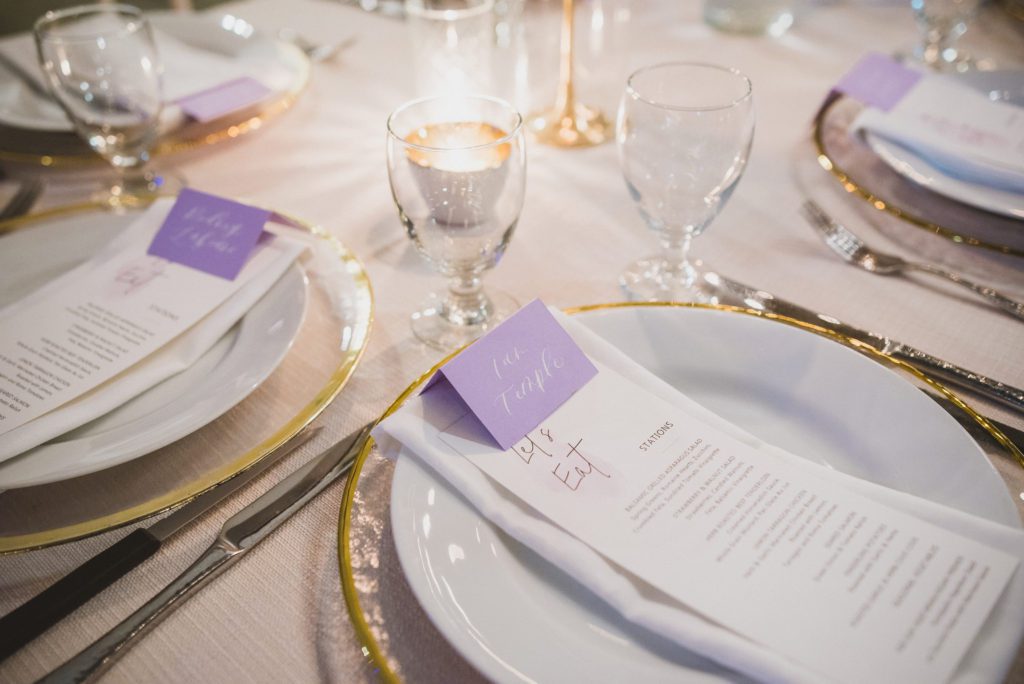
Escort cards tell a guest which table to sit at. Place cards tell a guest which seat at the table. Most weddings use either escort cards or a seating chart at the reception entrance, then place cards at each individual seat (or skip place cards entirely and let guests choose any seat at their assigned table).
Do you need both escort cards and a seating chart?
No. The two serve the same function (telling guests which table to sit at), and using both creates redundant information. Choose one based on guest count, aesthetic preference, and whether you want individual takeaway cards or a single statement display.
When should escort cards be displayed?
Escort cards are displayed at the reception entrance starting at cocktail hour. Guests pick up their card on the way from cocktail hour to dinner. The display typically gets photographed during cocktail hour and stays up until everyone has picked up their card and moved to dinner.
How early should I plan wedding seating?
Start three weeks before the wedding, once your RSVP deadline has passed and you have near-final counts. Earlier than that creates problems because guest counts are still shifting. Later than that produces rushed, sloppy assignments. The three-week window also gives you time to live with the layout for a day or two before committing.
Where do escort cards go at a wedding?
Escort cards are displayed at the reception entrance, on a designated table or vertical display that guests pass as they enter from cocktail hour. The display should be easily visible, well-lit, and arranged alphabetically by last name so guests can find their card quickly.
Can you have open seating at a wedding?
You can, but it usually creates more problems than it solves. Chairs and place settings get stolen between tables, whole-room photos look uneven, guests cluster into cliques, and family conflicts get tested. Open seating works best at very small weddings under 50 guests, or at structured “open seating” formats where tables are pre-grouped by relationship (family, college friends, work colleagues) even without individual assignments.
What is the average cost of a wedding seating chart?
A printed or chalkboard chart from an Etsy seller or local stationer typically runs $75 to $300. Custom acrylic or mirror charts with hand-lettered calligraphy run $300 to $800. Floral installation charts or custom statement pieces can run $800 to $2,500 depending on size and complexity. Escort cards typically run $1 to $4 per card, so the total for 150 cards lands between $150 and $600.
Planning Your Wedding Seating
If you are planning a wedding at Harbor View Loft, our coordinators can walk through floor plan options, table arrangements, and where the escort card display or seating chart will live in the room. Contact us to schedule a tour.
