
If you have heard the term “reception style” thrown around and were not sure exactly what it meant, you are not alone. The format goes by half a dozen names, depending on who you ask and what part of the country you are in. The idea is the same. Skip the long seated dinner. Build the evening around food stations, lounge seating, and constant movement. Guests eat when they want, sit when they want, and spend most of the night on their feet.
This guide covers what a reception style event actually is, when it works best, how to handle seating and food, and the small logistics that make or break the format.

What Is a Reception Style Event? Understanding Each Format
A reception style event replaces a traditional seated dinner with continuous food stations, passed appetizers, and small plates. Food flows continuously across multiple stations rather than occurring in a single scheduled dinner block. Seating is arranged in smaller, scattered groupings rather than assigned tables for the entire room.
While all reception style events prioritize movement and social interaction, different terms highlight specific layout and service styles.
Moving Style Reception
This format centers on open floor space and continuous guest interaction between the indoor loft and the wraparound balcony. Food stations and lounge clusters encourage guests to change locations naturally throughout the evening. Our team manages station restocking and table cleanup so the movement stays effortless.
Progressive Reception
A progressive reception introduces different culinary stations or event experiences in phases as the night unfolds. Guests enjoy passed bites during arrival, move to savory small plate stations an hour later, and finish with late-night snacks. The phased rollout keeps the room energized without requiring formal announcements.
Cocktail Style Reception
This variation pairs high-top cocktail tables and lounge seating with continuous tray-passed appetizers and full bar service. It creates an elegant, party-forward atmosphere that transitions easily into dancing. Guests enjoy a social evening with constant access to drinks and light bites.
Strolling Reception
A strolling reception spreads themed food stations across different areas of the venue, inviting guests to explore the space. Attendees wander at their own pace, sampling different dishes while taking in panoramic harbor views. The layout prevents line bottlenecks by keeping food service decentralized.
Standing or Stand-Up Reception
Designed for higher guest counts, a stand-up reception relies heavily on tall cocktail tables, bar-height perches, and passed hors d’oeuvres. While limited perimeter seating remains available for guests who need a break, the main floor stays clear for maximal social interaction. It suits active corporate mixers, lively milestone birthdays, and celebratory toasts.
Walking Reception
Similar to a strolling format, a walking reception encourages guests to move comfortably between indoor dining areas and outdoor balcony spaces. Small, single-fork plates ensure guests can hold their dish while walking and conversing. The structure keeps the gathering fluid, relaxed, and visually engaging.
Floating Reception
In a floating reception, guests float between scattered seating pockets, food stations, and bar areas throughout the event. No single table anchors a guest for the entire night, creating a flexible environment for multi-generational mingling. One coordinator oversees room timing and staff flow so the experience remains smooth.
All of these describe the same basic idea: a relaxed, mingling-heavy event where guests move freely rather than sit in one place for two hours.

How a Reception Style Event Differs from a Traditional Reception
The core differences come down to seating, food, and timing.
- Seating: Traditional receptions assign every guest to a table for the full dinner. Reception style events provide seating for some guests at any given time, mixed with cocktail tables and lounge groupings.
- Food service: Traditional receptions serve a plated meal or a single buffet line. Reception style events run several food stations simultaneously, with passed appetizers throughout the night.
- Timeline: Traditional receptions have clear blocks (cocktail hour, dinner, toasts, cake, dancing). Reception style events run more continuously, with food and entertainment overlapping rather than alternating.
- Atmosphere: Traditional receptions feel structured and formal. Reception style events feel closer to a great party with food.
Neither format is better than the other. They serve different goals and suit different couples.

When a Reception Style Event Works Best
This format shines for couples and hosts who want:
- A livelier, mingling-heavy event. Guests spend the night on their feet, talking to more people than they would at an assigned dinner table.
- To fit more guests in the same space. Without a full grid of round dining tables, you can comfortably host 30 to 50 percent more people in the same room.
- A less formal feel. Reception style suits laid-back weddings, milestone birthdays, anniversary parties, and corporate gatherings that lean social.
- More food variety. Multiple stations let you serve a wider range of flavors, accommodate dietary needs gracefully, and give picky guests options.
- Lots of dancing. Without a long sit-down dinner anchoring the middle of the night, the dance floor stays active from earlier in the evening.
- A younger or movement-loving crowd. Guests who would rather stand and mingle than sit at a single table for two hours thrive in this format.
It works less well for very formal weddings, events with a high proportion of older or mobility-limited guests, or events where speeches and toasts need a captive seated audience.

Reception Style Seating: How to Plan It
One of the most common questions is how much seating to provide. Some planners say 50 percent of your guest count. Others recommend closer to 75 percent. Our take is somewhere in between, with the mix matters more than the math.
A few seating elements that work together:
- Smaller dining tables that seat 4 or 6. Reserve these for guests you know will want to sit through most of the night. Older relatives, parents, anyone who appreciates a base.
- Lounge groupings. Sofas, armchairs, ottomans, side tables, and throw pillows clustered into conversation pockets. These soften the room and signal “stay a while.”
- Cocktail tables. Scattered through the space at standing height. Guests use them to set down drinks and plates while talking.
- Lounges near the dance floor. A few seats within sight of the music keep guests connected to the energy of the room even when they need a break.
- Bar-height tables with stools. A middle ground between seating and standing, especially useful around the perimeter.
Distribute these elements throughout the venue. Clusters of three or four seating types in one area form natural conversation zones and draw guests into different parts of the space across the night.
For couples who want a private moment to themselves during the event, a small sweetheart table still works at a reception style wedding. Keep it placed near the dance floor or food stations so you stay in the flow of the room.
How Many Cocktail Tables Do You Need?
A rough planning formula for cocktail tables is one table per six to eight guests, since not every guest will be at a table at the same time. Multiply that across a typical guest count:
- 50 guests: 6 to 8 cocktail tables
- 100 guests: 12 to 15 cocktail tables
- 150 guests: 18 to 22 cocktail tables
- 200 guests: 25 to 30 cocktail tables
This is in addition to your seated tables, lounge groupings, and bar height tables. Mixing sizes keeps the room visually varied. Standard cocktail tables are 30 to 36 inches in diameter and 42 inches tall.
Food Service at a Reception Style Event
Food is what makes or breaks the format. Nobody wants to attend a five hour cocktail party with three trays of light appetizers. The function of the food is to actually feed your guests, not just decorate the room.
Reception style events are categorized by flowing food and station service. The presentation matters as much as the menu.

Passed Hors d’oeuvres and Light Bites
The evening usually opens with passed appetizers as guests arrive. Wait staff circulate through the room with trays of finger food. Easy to eat with one hand, no utensils required, no dripping sauces. This keeps the bar area clear and gives guests something to do while they greet each other.
Small Plate Stations
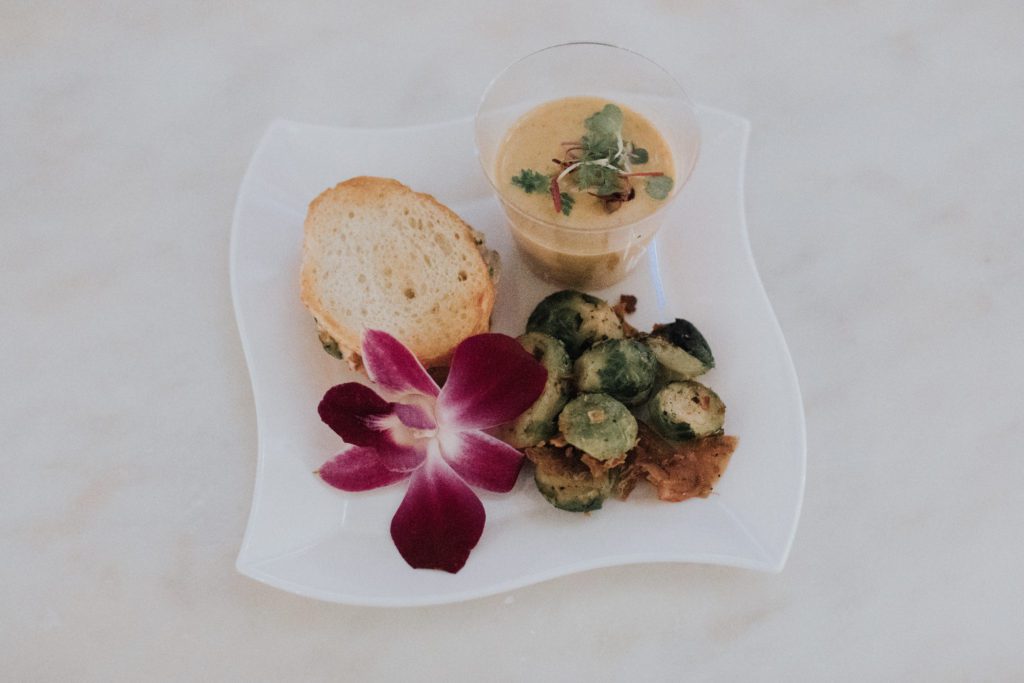
The heart of the format. Stations are smaller and more focused than a traditional buffet. Each one features a specific dish or theme, and guests visit several over the course of the night. At our events we typically run at least three small plate stations from our menus. Three small, well-staffed stations beat one long buffet line every time.
A few of our most popular station pairings:
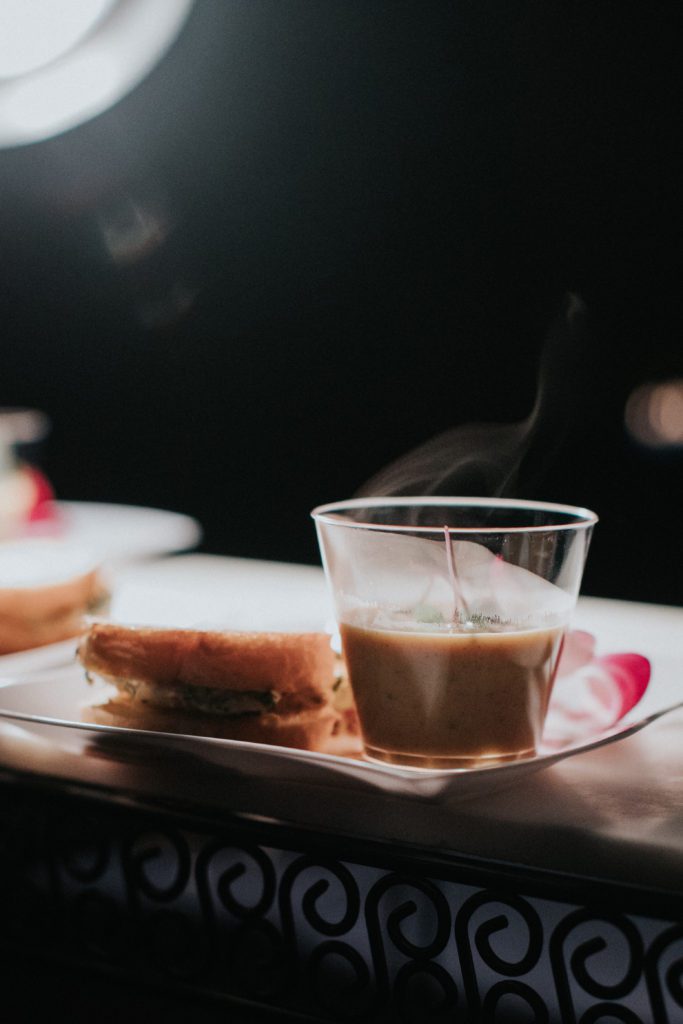
- Spinach and Artichoke Grilled Cheese served alongside Creamy Tomato Basil Bisque
- Braised Beef Short Ribs in a Demi-Glace with Goat Cheese Whipped Potatoes
- Our famous Mac n’ Cheese Bar with a variety of toppings that pleases guests of every age
Items are designed to be easy to eat. Fewer forks. No two-handed dishes. Plates stay small so guests can keep moving.

Late Night Bites
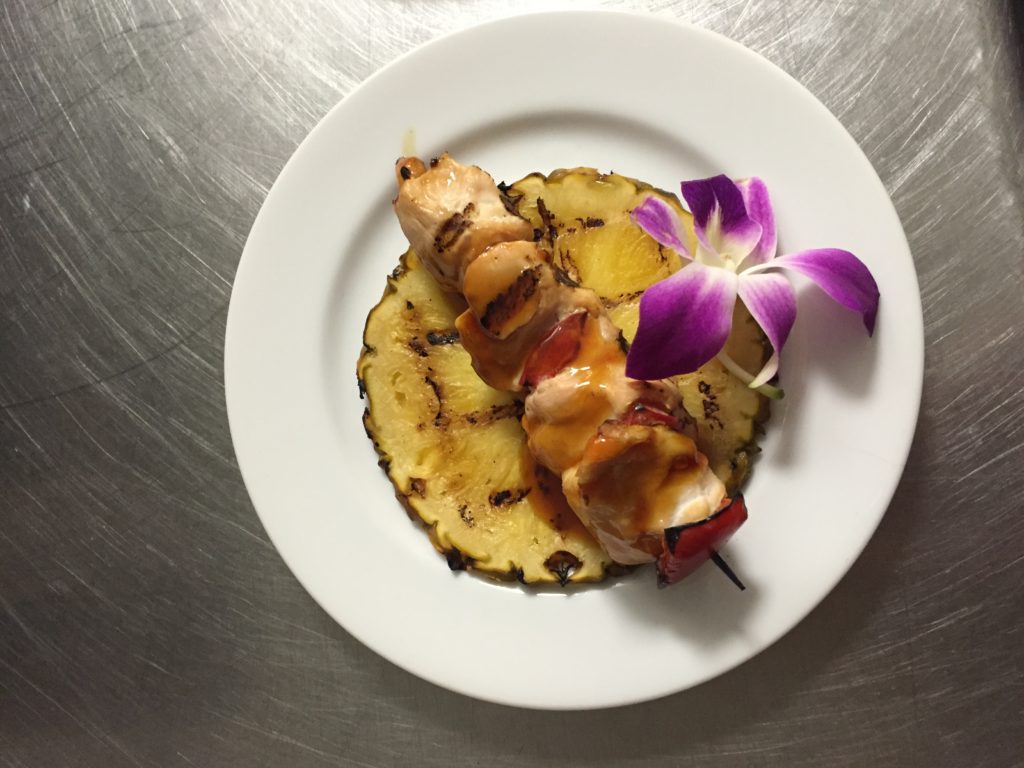
The transition from light to heavy to sweet matters, but the part most couples forget is the late night snack. Around the time the dance floor hits its peak, a fresh round of food re-energizes the room. Sliders and fries. Milk and cookies. Mini pizzas. Tacos al pastor. Pick something hearty and unexpected and you will hear about it from your guests for years.
One detail worth knowing: there is no need to announce that food service has begun. Guests will follow the lead of the couple and the wedding party. If they are hungry, they will come to the stations. The format respects their pacing.
Drink Service at a Reception Style Event
Drinks follow the same logic as food: keep them moving and accessible. A few practical notes:
- Place bars where they create flow, not bottlenecks. Two smaller bars positioned at opposite ends of the space work better than one large bar in the corner.
- Signature cocktails earn their keep. One or two house drinks named for the couple or event make the bar feel intentional and give guests a fast first order.
- Consider a coffee or espresso station for later in the night. Especially for events that run past 10 pm, it keeps guests on their feet for the last hour.
- Water stations matter. Self-serve water and lemon water around the room prevents the bar from getting crushed by simple requests.

Timeline and Flow of a Reception Style Event
A reception style event runs differently than a traditional reception. There is no single dinner block. The timeline blends continuously instead of jumping between sharply defined phases.
A typical five hour evening might flow like this:
- Hour 1: Guests arrive. Passed appetizers and light bites circulate. First food stations open. Music starts soft and conversational.
- Hour 2: Main small plate stations come online. Toasts happen here, brief and informal. Music starts to lift.
- Hour 3: Dance floor opens. Food stations remain open. New stations rotate in. First dances and parent dances if applicable.
- Hour 4: Peak energy on the dance floor. Late night station opens. Coffee or espresso becomes available.
- Hour 5: Cake or dessert station. Final passed bites. Last call at the bar. Guests filter out gradually rather than all at once.
The whole night feels less like a sequence of events and more like one continuous celebration.
Pros and Cons of a Reception Style Event
What works in the format:
- Guests mingle more and meet more people across the night
- Dance floor stays active longer because there is no dinner break
- You can host more guests in the same square footage
- More food variety, easier to handle dietary restrictions across multiple stations
- Less rigid timeline, less stress on coordinators when something runs over
- Often more cost-effective per guest than a plated dinner of equivalent quality
What can be challenging:
- Older guests or anyone with mobility issues need clear seating options
- Toasts and speeches lose impact without a captive seated audience
- Less traditional, which matters to some couples and families
- Requires more attentive catering staff than a single buffet line
- Guests need clear signage or instinct to find the stations spread around the room

Reception Style Events at Harbor View Loft
The format works particularly well at Harbor View Loft because the property is designed for movement. Ceremony on the patio, cocktail hour on the wraparound balcony, food stations inside with the harbor as the backdrop, and the dance floor anchoring the room. Guests flow naturally between indoor and outdoor spaces without bottlenecks.
Our in-house catering partner, Personal Touch Dining, runs the food stations for every reception style event we host. The team handles passed appetizers, station setup, restocking, and the late night rollout. Centerpiece and table setup work alongside the same flow, so the room transforms with the evening rather than feeling static. For couples planning the format here, we walk through layout, station placement, and seating mix during the planning sessions covered in our wedding venue package. For corporate and social events, the same flexibility applies, see our corporate event venue details. You can also browse layout examples in our highlights gallery.
Frequently Asked Questions
What does reception style mean?
Reception style refers to a wedding or party format that replaces the traditional seated dinner with food stations, passed appetizers, and small plates served throughout the night. Guests move freely between stations and seating areas rather than being assigned to a single dining table.
What is a strolling reception?
A strolling reception is another name for a reception style event. The terms strolling, walking, floating, standing, moving, progressive, and cocktail style all describe the same basic format: continuous food service across multiple stations with mixed seating and constant guest movement.
What is the difference between a cocktail reception and a sit-down dinner?
A cocktail reception serves food at stations and through passed appetizers, with seating provided in smaller groupings rather than at assigned dinner tables. A sit-down dinner serves a plated meal at assigned tables for every guest in a single timed block. The cocktail format is more mobile and social. The sit-down format is more structured and formal.
How long is a typical reception style event?
Most reception style events run four to five hours, similar to a traditional reception. The difference is in how the time is structured, with food and entertainment overlapping continuously rather than alternating between defined dinner and dancing blocks.
How much food do you need at a reception style event?
Plan for roughly the same total food per guest as you would at a seated dinner, but spread across more variety. A common formula is six to eight passed appetizer bites per guest during arrival, three to four small plate stations with two to three items each, and a late night snack. The pacing makes it feel like more food because guests are eating across the full event rather than in one block.
Is a reception style event cheaper than a traditional reception?
It can be, but not always. Reception style events save on table rentals, linens, and chair counts because you need less of everything. They can cost more in attentive catering staff and station setup. Net cost usually lands within 10 to 20 percent of a traditional reception of equivalent food quality.
Can you have a reception style event for a formal wedding?
Yes. Reception style does not have to mean casual. With formal attire, elevated station presentation, custom signage, and structured lounge groupings, the format can read as sophisticated as any seated dinner. The key is intentional design throughout the room rather than treating it as a downgrade from a plated meal.
How do you tell guests it’s a reception style event?
Mention the format on the wedding website and on the reception invitation insert. Phrasing like “join us for a cocktail style reception with food stations and dancing” sets expectations and helps guests dress accordingly. Comfortable shoes, in particular, become a much-appreciated heads up.
Planning a Reception Style Event at Harbor View Loft
If a reception style event sounds like the right fit for your wedding, corporate gathering, or private party, we can walk you through how the format works in our space, from seating layout to station design to timeline flow. Contact us for full menus and to schedule a tour.
