
Choosing where you and your partner actually sit at your own wedding feels strange to plan, until you realize it shapes the entire reception. The room flows differently. Photos land differently. Even the way guests approach you shifts.
Most couples land somewhere between two options. A sweetheart table for just the two of you, or a head table that keeps your bridal party close. There is also a third path many couples overlook, and we get to that below.
Here is a clear comparison, with sizing, pros and cons, and a few styling notes, so you can pick what fits your day.
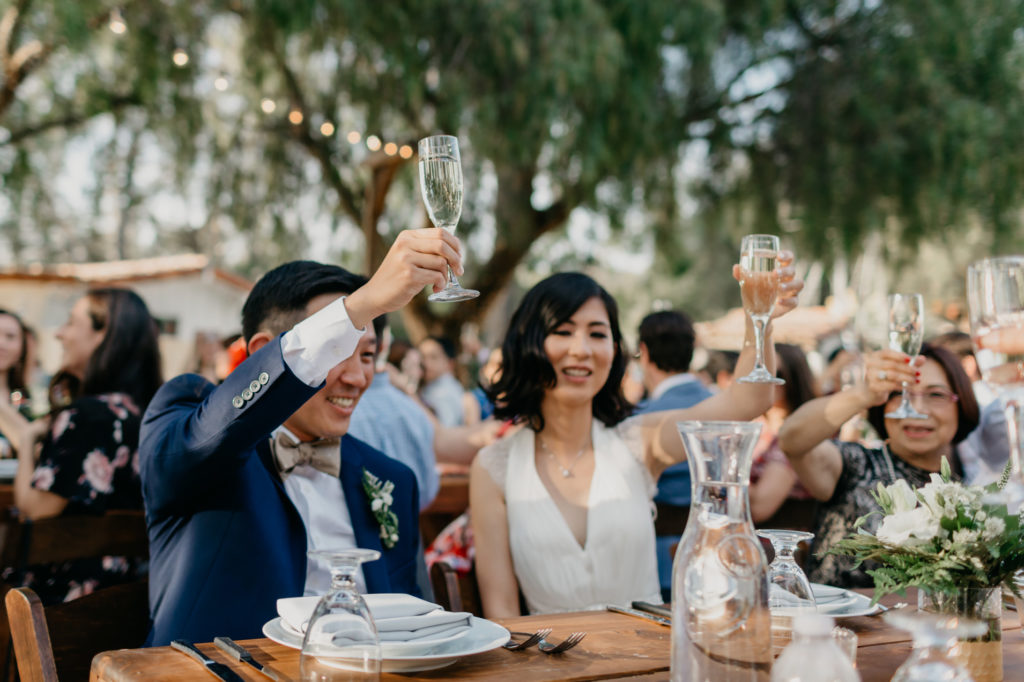
What Is a Sweetheart Table?
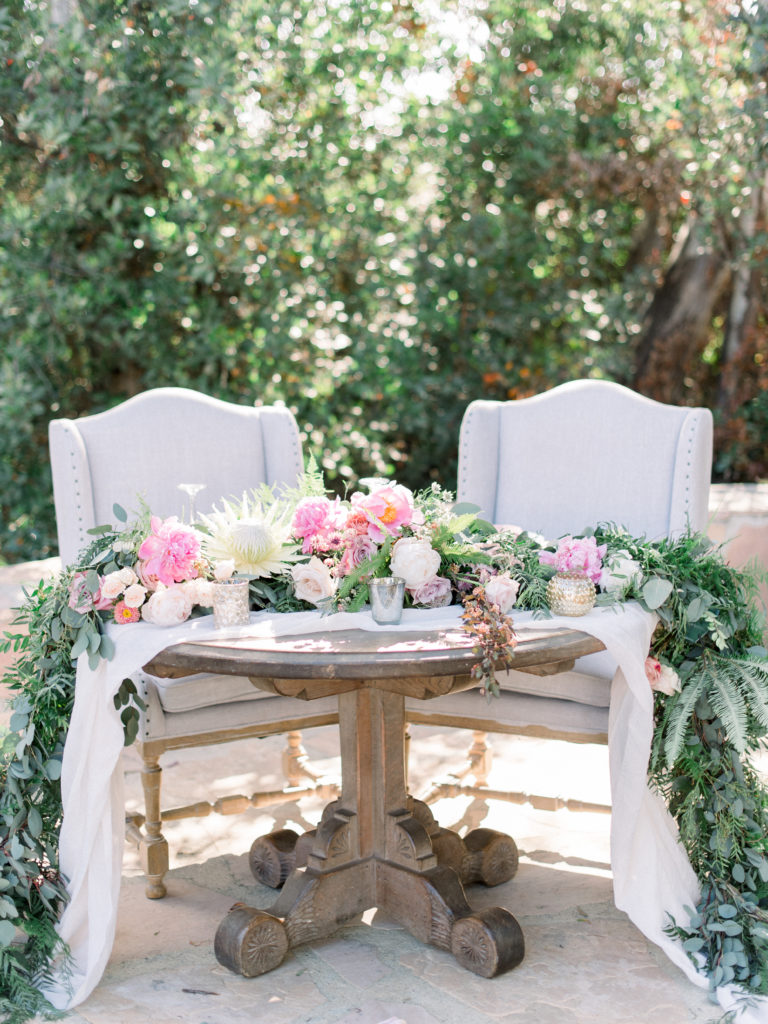
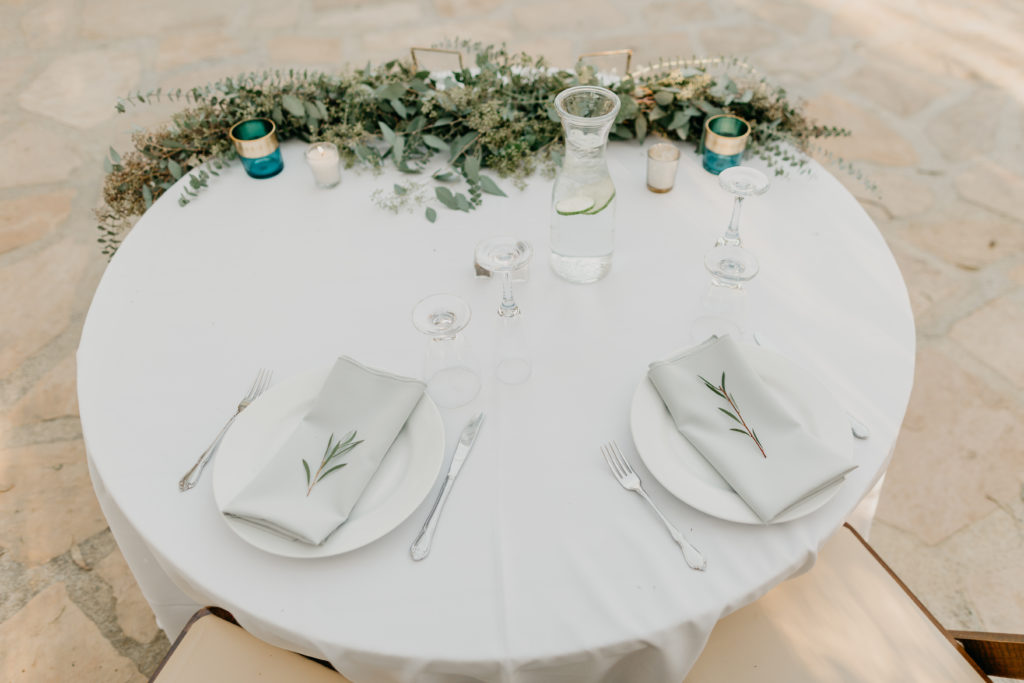
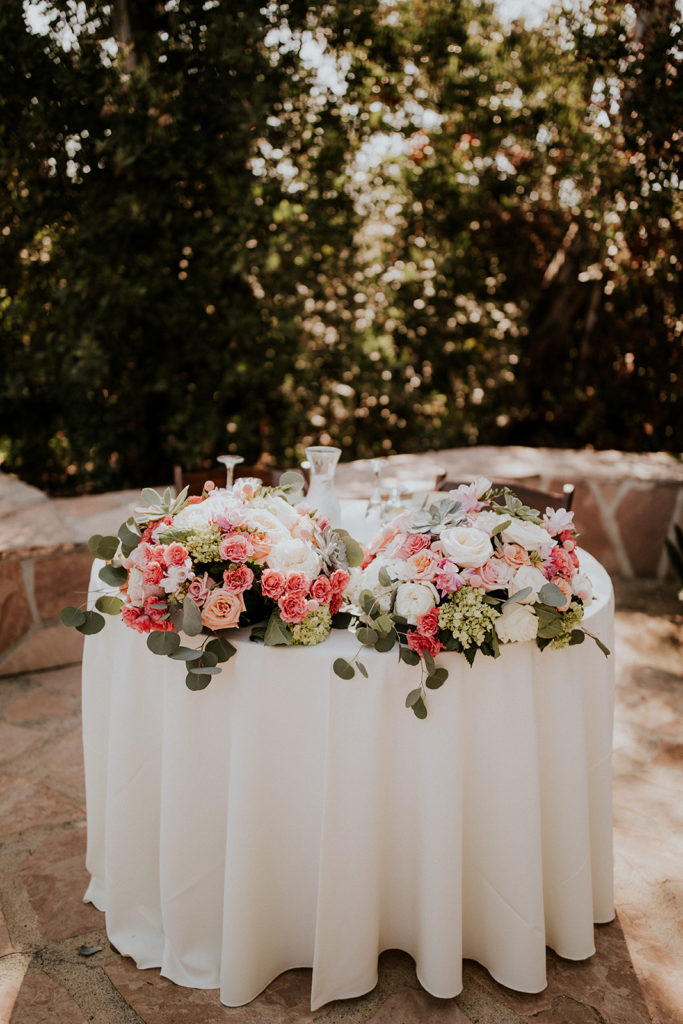
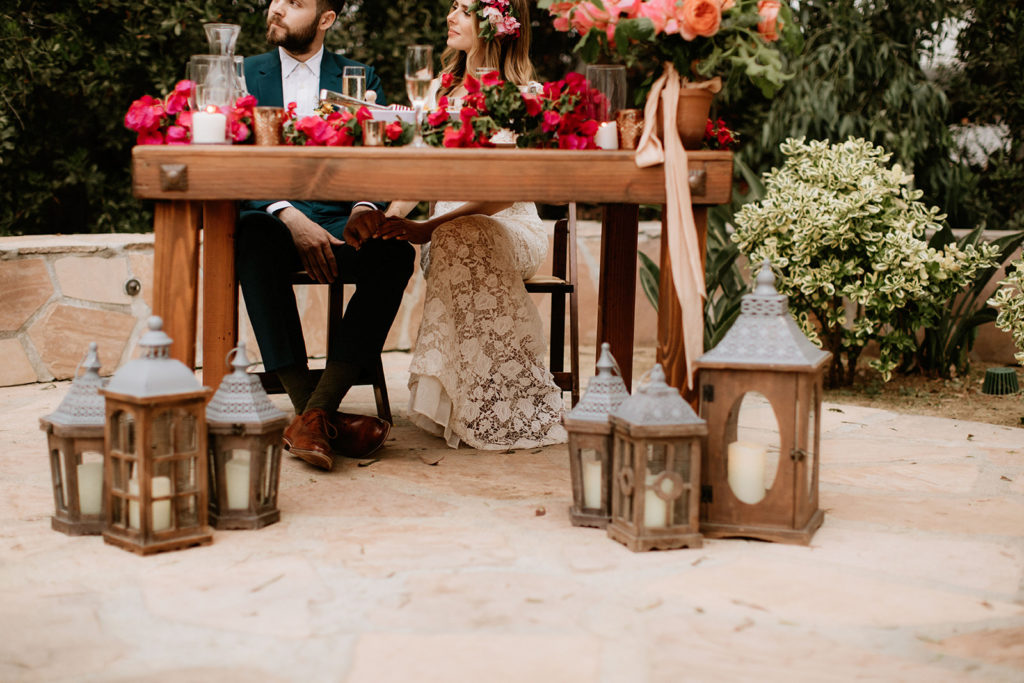
A sweetheart table is a small table set for two, reserved for the newlyweds. It sits at the front of the reception, facing the room, often slightly raised or anchored against the most photogenic wall the venue has. Guests see you. You see everyone. The setup signals “this is our moment” without putting a long bridal party on display.
Couples often pick a sweetheart table when they want a few quiet minutes during dinner, when their bridal party is too big to seat at one head table, or when they want full creative control over a single tabletop.
Sweetheart Table Size and Setup
Most sweetheart tables are either a 48 inch round, a 60 inch round, or a small rectangle around four to six feet long by 30 inches deep. Smaller rounds feel intimate. Rectangles work better against a backdrop wall or floral arch because the linens and decor read cleanly from across the room.
Common placement choices include centered in front of the dance floor, off to one side with the cake table balancing the room, or tucked under a ceremony arch reused as a backdrop. At Harbor View Loft, couples often anchor it near the windows so the harbor sits behind them in every photo.
Florist: Native Poppy
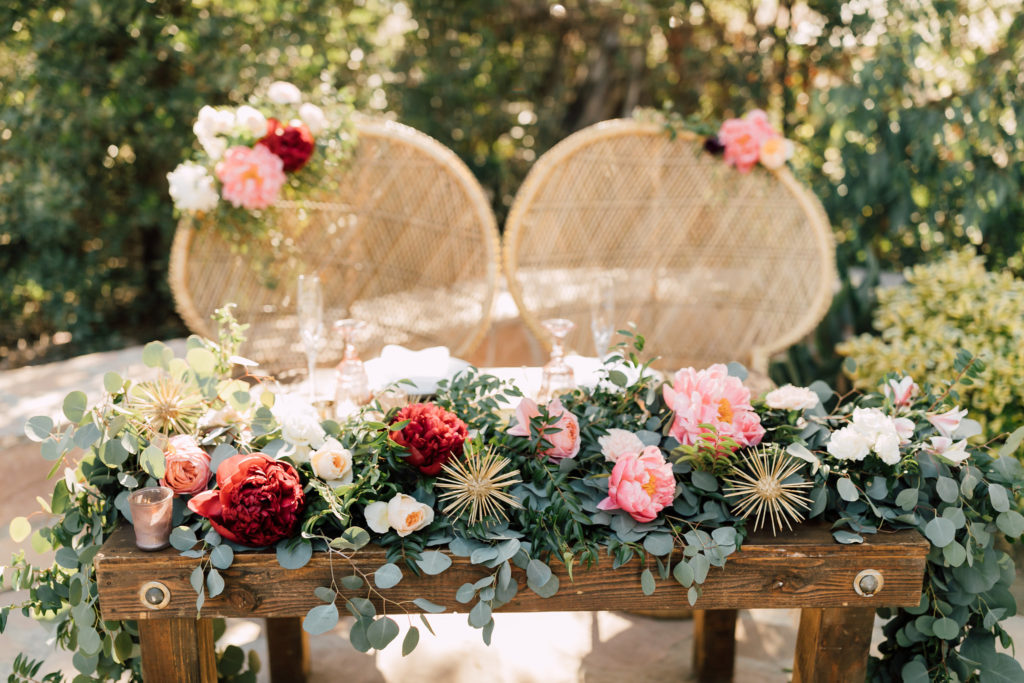
What Is a Head Table?
A head table is a longer table that seats the couple along with the bridal party, and sometimes immediate family. It runs perpendicular to the room with everyone facing out toward the guests, so no one has their back to the celebration. The format goes back to the high tables of medieval feasts, where hosts seated trusted people closest to them. Today the meaning is simpler. These are the people who carried you here, so they sit with you.
Head tables work best for small to medium bridal parties. Once the group climbs past ten or twelve, the table starts to stretch into territory where you cannot easily talk to the people at the ends.
Head Table Size and Setup
Head tables are usually built from standard banquet rectangles, six feet or eight feet long, pushed end to end. As a rough guide:
- 4 to 6 people: one 6 ft or 8 ft table
- 6 to 10 people: two 6 ft or 8 ft tables joined
- 10 to 14 people: three tables joined, around 18 to 24 feet long
Plus ones for bridal party members are a separate decision. Some couples seat them at the head table to keep partners together. Others seat plus ones at nearby tables and let bridal party members visit between courses. Both work. The first option simplifies the photos. The second keeps the head table shorter and more manageable.
Florals by a family member of the Bride
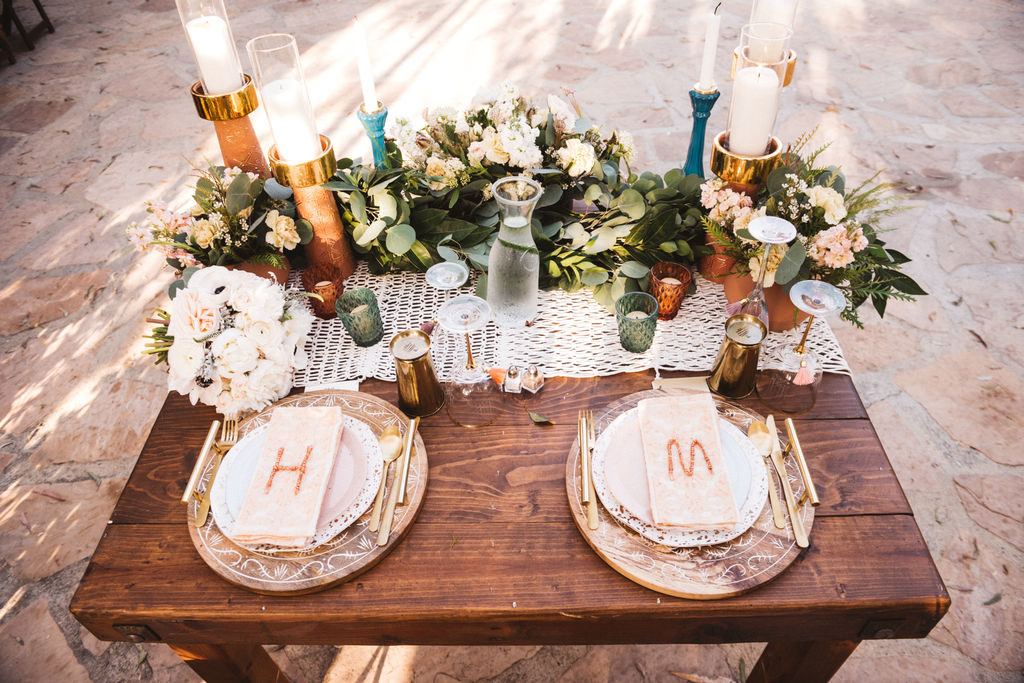
Sweetheart Table vs. Head Table at a Glance
| Detail | Sweetheart Table | Head Table |
|---|---|---|
| Who sits there | The couple, just the two of you | The couple plus the bridal party |
| Best for bridal party size | Any size, especially larger parties | Small to medium (4 to 10 people total) |
| Typical footprint | 48 to 60 inch round, or small rectangle | 12 to 24 feet long, rectangles joined |
| Privacy during dinner | High | Low, you are in conversation the whole time |
| Decor budget | Concentrated, room to splurge | Spread across the full length |
| Photos | Easy to frame with a clean backdrop | Group shots feel natural, candids harder |
| Guest flow | Easier for guests to approach you | More structured, less drop-in traffic |
Florist: KO Floral Designs
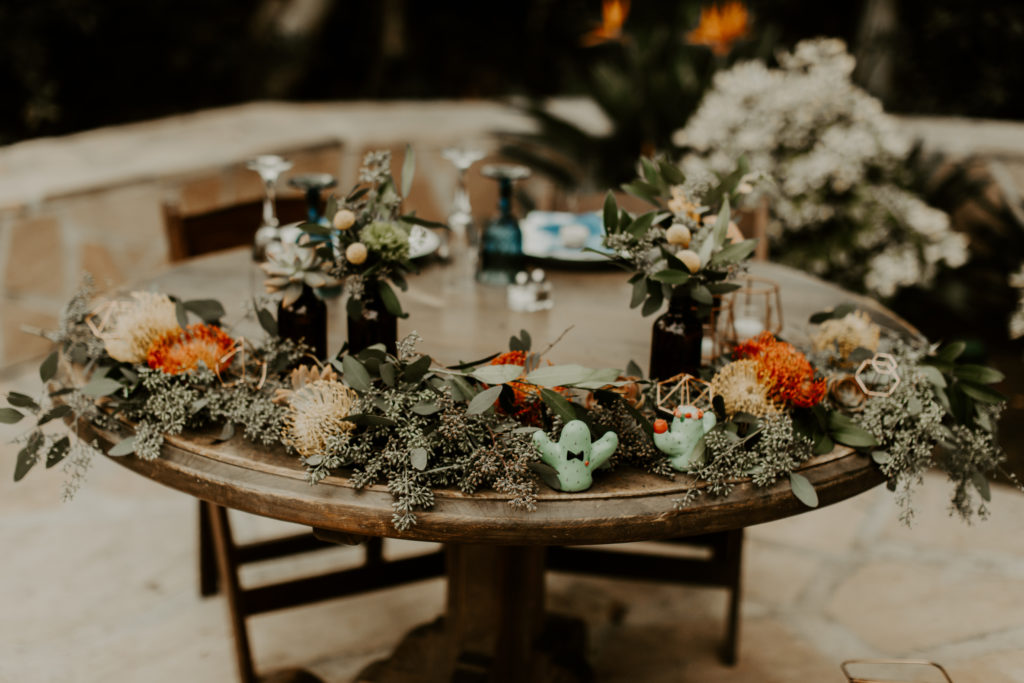
When a Sweetheart Table Makes Sense
Reach for a sweetheart table when any of the following are true:
- Your bridal party is large. Anything over ten people starts to make a head table awkward. A sweetheart table sidesteps the problem entirely.
- You want a few minutes alone during dinner. The day moves fast. Sitting at a small table together for even twenty minutes resets you both.
- You want decor that goes further. A sweetheart table only needs two place settings. The budget you would have spread across ten chairs can concentrate into florals, candles, or a custom backdrop.
- You want guests to approach you naturally. A small, visible table is easier to walk up to than a long head table where you have to step around twelve other people.
- The symbolism matters to you. For some couples, sitting together for the first meal as a married couple is the point. The table makes that visible.
If your bridal party is large but you still want to honor them in a structured way, a sweetheart table pairs well with a bridal party table set just behind or beside you. We sometimes see couples build that exact layout into their reception flow at Harbor View Loft, so the room feels connected without forcing a 20 foot head table.
Florist: Layered Vintage
When a Head Table Makes Sense
A head table is the right call when:
- Your bridal party is small to medium. Four to ten people, including the two of you, sits comfortably at a head table without sprawling.
- You want your closest people physically next to you all night. The bridal party becomes part of the visual story, not background.
- The room layout supports a long table. Some venues have a natural focal wall where a head table reads like a stage. Others are better suited to a smaller anchor point.
- You like a more traditional reception structure. Head tables carry a classic, formal feel, which works beautifully with timeless decor and seated dinners.
If you do go with a head table, plan the upgrades that make it look intentional rather than functional. Linens to the floor, coordinated chargers, and a layered floral runner do more than any single splurge. We covered some of these head table upgrades in a separate post.
Florals by the Bride and Groom
A Third Option: The Family Table
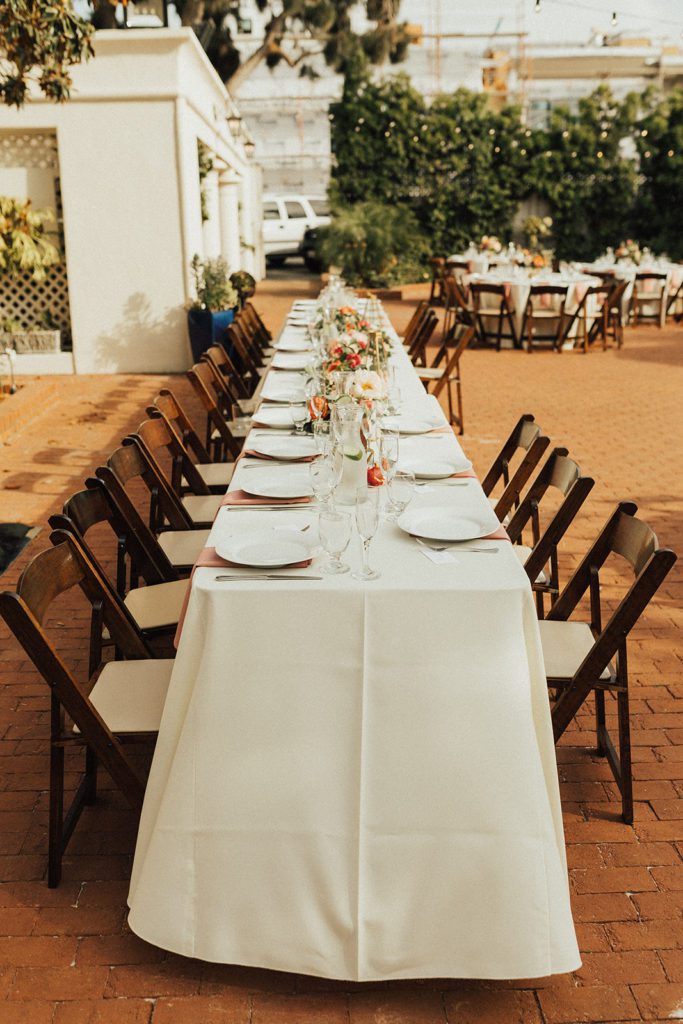
Some couples skip both setups and sit at a family table instead. It is essentially a long table, sometimes called a feasting table or king’s table, where you sit with your immediate family or with your bridal party plus their partners. Everyone shares one meal together, in the thick of the night, rather than being set apart.
This works well for couples who:
- Feel uncomfortable being on display all night
- Are very close with their families and want them at arm’s reach
- Have bridal parties so large that splitting them feels wrong
- Want to simplify decor and rentals across the room
The family table tends to feel warmer and less structured than either of the other two options. It also photographs beautifully because the moments are candid, not posed.
Florist: I Do Flowers For You
How to Choose Between a Sweetheart Table, Head Table, or Family Table
If you are stuck, run through these four questions with your partner. The answers usually tip the decision in one direction.
- How big is your bridal party? Ten or fewer total, head table is in play. More than ten, sweetheart or family table becomes easier.
- How much private time do you want during dinner? A lot, sweetheart table. Some, head table. None needed, family table.
- How structured do you want the reception to feel? Traditional and formal leans head table. Modern and easy leans sweetheart. Warm and casual leans family.
- What is your decor priority? One showpiece table, sweetheart. A long visual statement, head or family table.
Your venue and coordinator can also flag practical constraints you may not see yet, like sightlines from the dance floor or where the photographer needs space to work.
Florist: Siren Floral Co.
Decoration Ideas for Sweetheart and Head Tables
Whichever table you choose, a few styling principles travel well across themes.
Florals and greenery
For a sweetheart table, a low, lush centerpiece keeps sightlines clean for photos. For a head table, a runner of greenery with clustered bud vases reads better than scattered arrangements, since it ties the full length together.
Candles and lighting
Taper candles in mixed heights add motion without crowding the table. Battery-powered LED tapers are a good fallback at venues with outdoor sections where wind can be a factor.
Seasonal and themed looks
Rustic sweetheart tables lean into wood, ivory linens, and field flowers. Boho leans terracotta, pampas, and warm metals. Coastal and tropical pull in soft blues, palms, and citrus accents. Fall weddings use deeper blooms, copper, and amber glass. The table itself stays modest. The theme lives in the linen, the florals, and the backdrop behind you.
Signage and personal touches
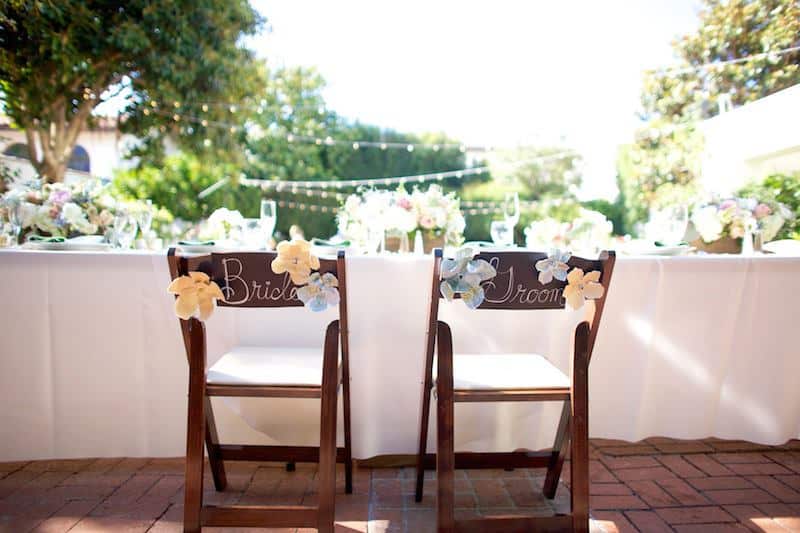
A “Mr. and Mrs.” or “Better Together” sign is a soft touch that also helps guests find you. A framed photo from a meaningful moment in your relationship works just as well, and feels less expected.
If you want help visualizing what works at a waterfront venue, our photo gallery shows how past couples styled both setups against the harbor.
Florist: Splendid Sentiments
Frequently Asked Questions
What is a sweetheart table at a wedding?
A sweetheart table is a small table at the front of a wedding reception set just for the newlywed couple. It usually seats two, faces the rest of the room, and gives the couple a private moment during dinner while keeping them visible to guests.
How big is a sweetheart table?
Most sweetheart tables are either a 48 inch round, a 60 inch round, or a rectangle around four to six feet long by 30 inches deep. Smaller rounds feel intimate. Rectangles work better when you want to anchor the table against a floral wall, arch, or backdrop.
How many people can sit at a head table?
A head table comfortably seats four to ten people, including the couple. Beyond ten, the table stretches long enough that conversation becomes difficult between the ends, and most couples switch to a sweetheart table with bridal party seated nearby.
Does a sweetheart table need a table number?
No. Sweetheart tables are not usually numbered because they are not part of guest seating. Guests do not get assigned to a sweetheart table, so a number is unnecessary. A small sign or floral accent reads better in photos.
Can the bridal party still sit close if we have a sweetheart table?
Yes. A common setup is a sweetheart table at the front, with a dedicated bridal party table or two tables directly behind or beside it. This keeps everyone close, gives the couple a private space, and avoids the long-table awkwardness when the bridal party is large.
Is a sweetheart table or head table more popular?
Sweetheart tables have become more common over the last decade, partly because bridal parties have grown larger and partly because couples want a calmer dinner. Head tables remain popular at more traditional weddings and at smaller bridal parties.
What is a feasting table or king’s table at a wedding?
A feasting table, sometimes called a king’s table, is a long rectangular table where the couple sits with family or bridal party and their partners. It is essentially a longer, more inclusive version of a head table, designed to feel warm and communal rather than formal.
Florist: Tiny Victories
Setting the Right Table at Harbor View Loft
Whatever setup you land on, the venue itself does a lot of the work. At Harbor View Loft, the harbor sits behind every photo, the wraparound balcony opens up your reception layout, and our on-site coordinator walks you through which configuration fits your guest count and room flow. You decide where you want to sit. We handle the rest.
If you are early in planning, reach out to schedule a tour and we can walk you through real layouts from past weddings.
