
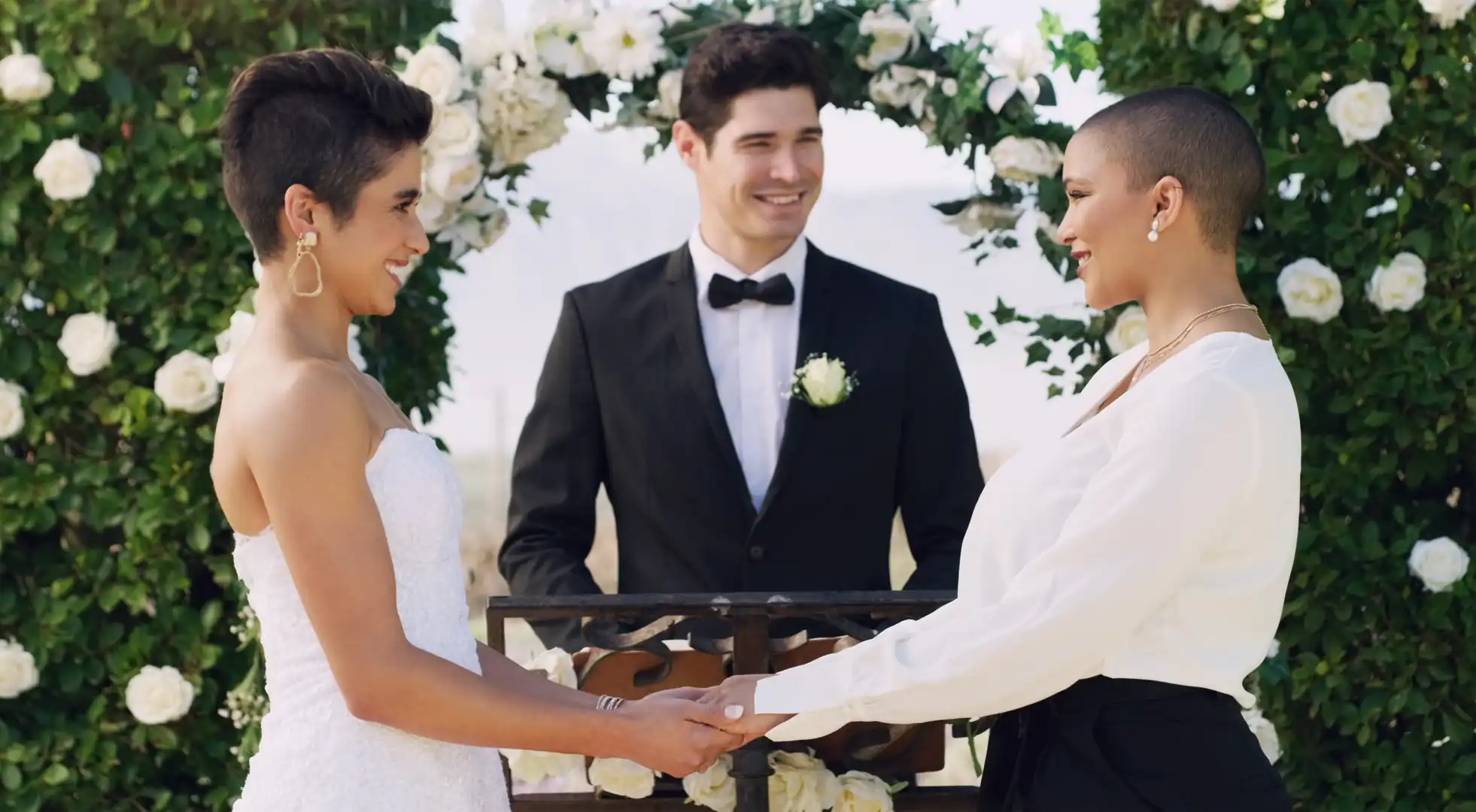
Traditional wedding ceremonies come with a lot of built-in assumptions: one person gives the other away, groomsmen stand on one side, bridesmaids on the other, vows follow a script written for two specific roles. None of that has to apply to your ceremony. Here’s how couples are reshaping these moments, plus a look at vows, readings, and structure that actually reflect the relationship being married.
Reimagining Traditional Ceremony Moments
Most ceremony traditions were built around a specific pairing, and the pieces that don’t translate are usually easy to spot once you look at them directly. A few of the most common ones couples rework:
- The aisle walk. Both partners can walk down together, walk from opposite ends and meet in the middle, or each be walked by a parent or chosen person. There’s no single correct version.
- “Giving away.” Many couples skip this entirely. Others replace it with both partners being walked in by family, or a shared blessing from both sets of parents instead of a hand-off.
- The first look. Works exactly the same regardless of who’s in it, still a quiet, private moment before the ceremony if you want one.
- Which side guests sit on. “Bride’s side” and “groom’s side” seating just becomes open seating, or guests choose based on who invited them.
Building a Wedding Party That Fits
The bridesmaid-groomsman split assumes two parties organized by gender. Most couples now build their wedding party around who the people actually are, not which side they’re supposed to stand on. A “best woman,” a mixed-gender party standing together rather than split by aisle side, or simply “attendants” instead of bridesmaids and groomsmen are all common now. The party can also be sized and structured however makes sense; there’s no rule requiring symmetry between two sides.
Vows That Are Actually Yours
Traditional vow scripts were written with specific roles in mind, and reading them as written can feel like performing someone else’s wedding rather than your own. Most couples now write personal vows instead, though some still want a structured starting point to build from rather than a blank page.
A workable structure that many couples adapt: an opening line about what drew you to your partner, two or three specific promises (not generic ones, the actual commitments that matter to your relationship), and a closing line that ties back to the opening. Reading examples from other same-sex couples can help you find language and rhythm, but the promises themselves should come from your actual relationship, not someone else’s.
If you want to keep something more traditional, most classic vow language works without any changes beyond swapping pronouns. The “I do” structure, ring exchange language, and closing pronouncement all translate directly.
Readings and Rituals to Consider
Unity rituals (candle lighting, sand blending, tree planting) work exactly the same regardless of who’s participating, and many couples use them as-is. For readings, poetry and prose written by or about same-sex couples specifically can feel more resonant than traditional wedding readings written with a different pairing in mind, though plenty of couples also choose readings with no reference to gender at all, favorite passages, family blessings, or readings chosen for what they say rather than who they were written for.
Ceremony Structure: What Stays, What You Can Change
The basic shape of a ceremony (processional, opening words, vows, ring exchange, pronouncement, recessional) works for any couple without modification. What changes is usually language: an officiant saying “spouses” or the couple’s names instead of “husband and wife,” and any scripted lines that assume a specific pairing get rewritten or cut. Most officiants experienced with same-sex ceremonies will already have this handled, but it’s worth confirming directly rather than assuming.
Frequently Asked Questions
Do we need a “giving away” moment in the ceremony?
No. It’s entirely optional. Many couples skip it, some replace it with both partners being walked in, and others keep a version of it with whoever they choose.
Can both partners walk down the aisle together?
Yes, this is one of the most common choices. Couples also walk from opposite ends and meet in the middle, or each walk in separately.
How do we handle traditionally gendered language in the ceremony script?
Most officiants will adjust language like “husband and wife” to “spouses” or your names directly. If you’re working with a religious officiant or a traditional script, it’s worth confirming this directly rather than assuming it’s already handled.
Should we write our own vows or use a traditional script?
Either works. Personal vows tend to feel more specific to the relationship, while traditional language (with pronouns adjusted) works fine if you’d rather not write from scratch. Some couples use a structure, a few specific promises inside a familiar shape, as a middle ground.
Do we need a mixed-gender wedding party?
No. Your wedding party can be built around the people who matter to you, in whatever configuration makes sense, without needing to balance genders or sides.
Planning Your Ceremony in San Diego
If you’re still deciding where to hold the ceremony itself, our LGBTQ wedding venue page covers how we handle inclusive ceremony details, from officiant coordination to how we set up the space for whatever structure you choose. Or contact us directly with questions.
