
The dessert is the part of an event guests actually photograph. A great cake gets a moment. A great dessert bar gets a line. Whether you are planning a wedding, a birthday, a baby shower, or a work happy hour, a dessert bar gives guests choice, variety, and a small moment of delight near the end of the night.
This guide covers what a dessert bar is, the types that work for different events, how to display and style one, how much dessert to plan per guest, and ideas for weddings, parties, birthdays, and work events.
What Is a Dessert Bar?
A dessert bar is a self-serve table or station at an event where guests choose from a curated selection of sweets. Instead of one plated dessert delivered to every seat, a dessert bar offers four to ten different bite-sized options, displayed together on platters, risers, stands, and walls. Guests pick what they want, in the portions they want.
The format goes by a few different names depending on what you are serving. People also call it a:
- Treat bar or sweet bar
- Pastry bar
- Cookie bar (when cookies dominate)
- Cupcake bar (cupcake-focused)
- Candy bar (penny-candy and confections)
- Dessert station or dessert table
The dessert bar concept is functionally the same across all of these. The name just shifts based on what is featured.
When a Dessert Bar Works Best
Dessert bars suit almost any event format, but they shine in a few specific situations:
- Receptions where guests are already moving. Cocktail style and reception style events flow naturally to a dessert station near the end of the night.
- Larger guest counts. Plating individual desserts for 150 to 300 guests takes time and labor. A self-serve bar lets the same group be served in 20 minutes.
- Mixed-age crowds. Variety solves the problem of trying to find one dessert everyone will like. Kids get cookies, adults get something richer.
- Dietary needs. A bar with clearly labeled gluten-free, dairy-free, or nut-free options serves more guests gracefully than a single plated dessert.
- Events where the cake is a moment, not the meal. Smaller couples’ cakes or display cakes free up dessert variety on the table next to them.
Types of Dessert Bars
The dessert bar format is flexible. You can build it around almost anything sweet, but a few specific types have become reliable crowd-pleasers.
Cookie Bar
An assortment of cookies in different flavors, sizes, and textures. Chocolate chip, oatmeal raisin, snickerdoodle, sugar cookies, macarons, and biscotti all work together. Stack on tiered stands or pile on platters. Cookies hold up well at room temperature for hours, which makes them low-stress for longer events.
Donut Wall and Donut Bar
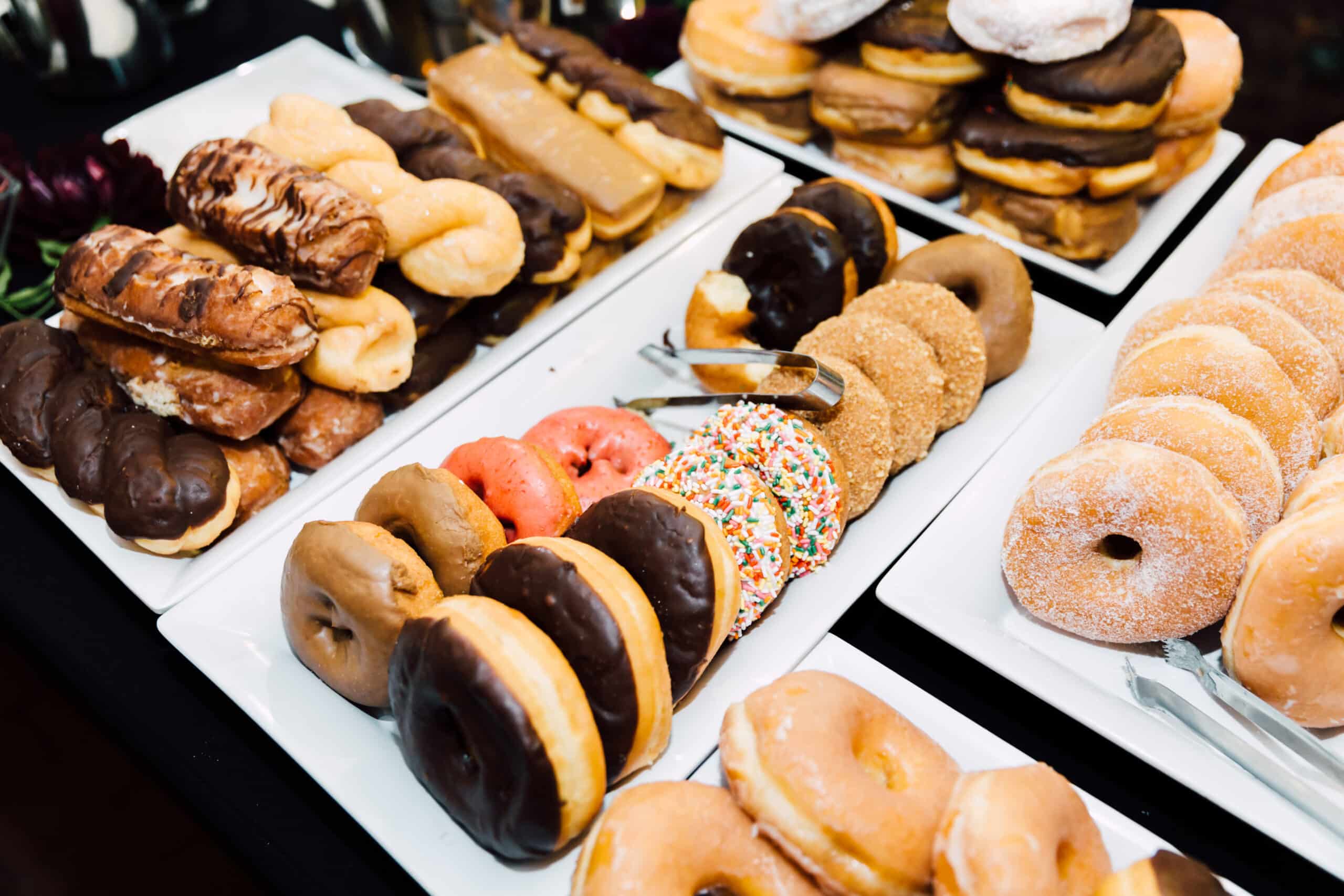
A vertical wooden or metal board with dowels where donuts hang in rows. Add a few platters of donut holes and mini donuts at the base. Donut walls photograph dramatically and double as event decor before guests even reach for one. Plain glazed, chocolate, sprinkled, and filled donuts cover the main preferences.
Cupcake Bar
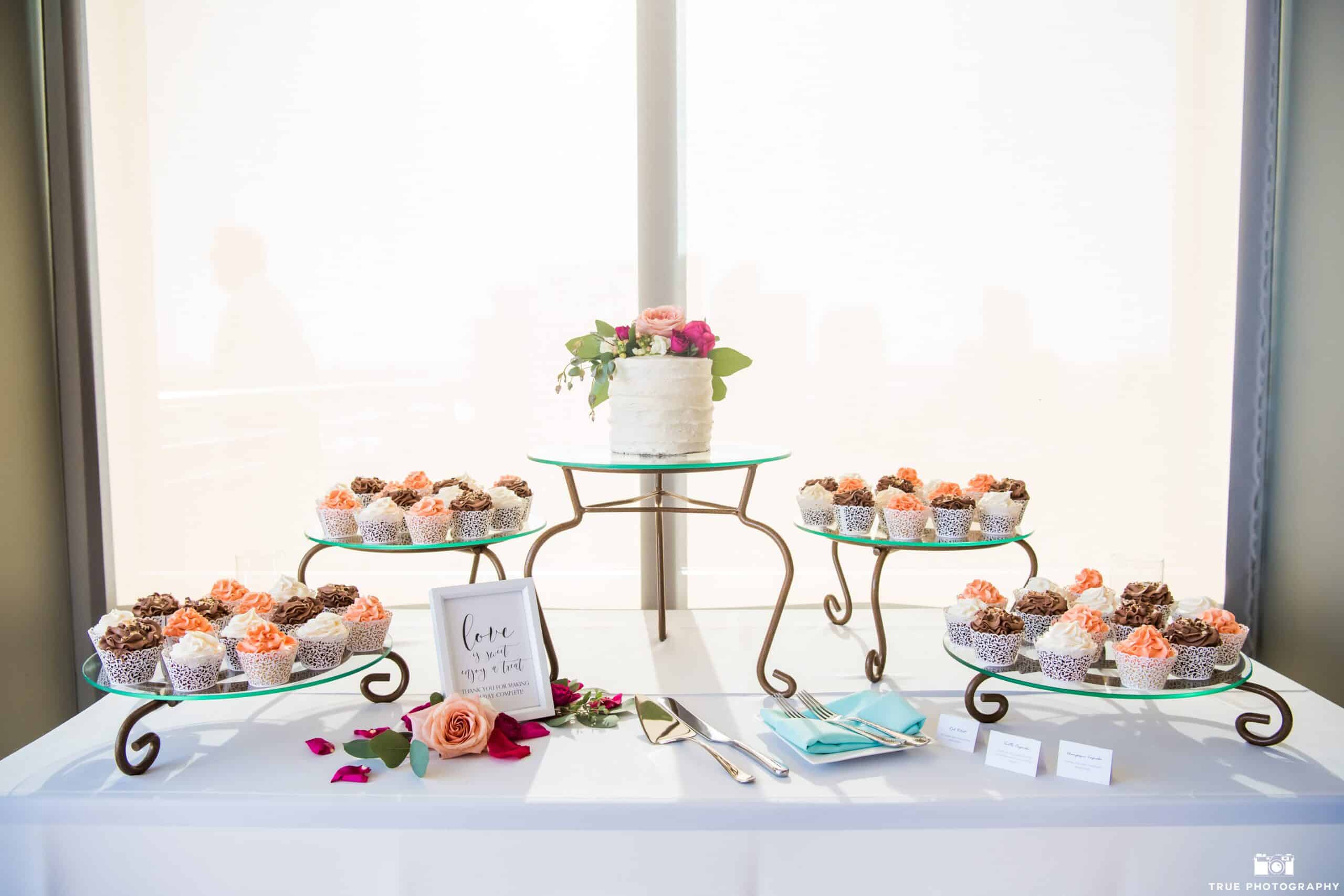
Two to four flavors of cupcakes on tiered stands. Often paired with a small cutting cake on top for traditional cake-cutting moments. Letting guests pick their own flavor takes pressure off the choice of a single wedding cake flavor.
Candy Bar
Glass apothecary jars filled with colorful candy. Guests scoop into paper bags or boxes to take home. Candy bars double as favors. They work especially well for shower events, holiday parties, and weddings with a vintage or whimsical theme.
Pastry Bar
Croissants, danishes, mini tarts, eclairs, cream puffs, and other French-style pastries. Pastry bars suit morning and brunch events, bridal showers, and corporate breakfasts. Pair with coffee and espresso for a complete experience.
Mini Dessert Bites and Dessert Squares
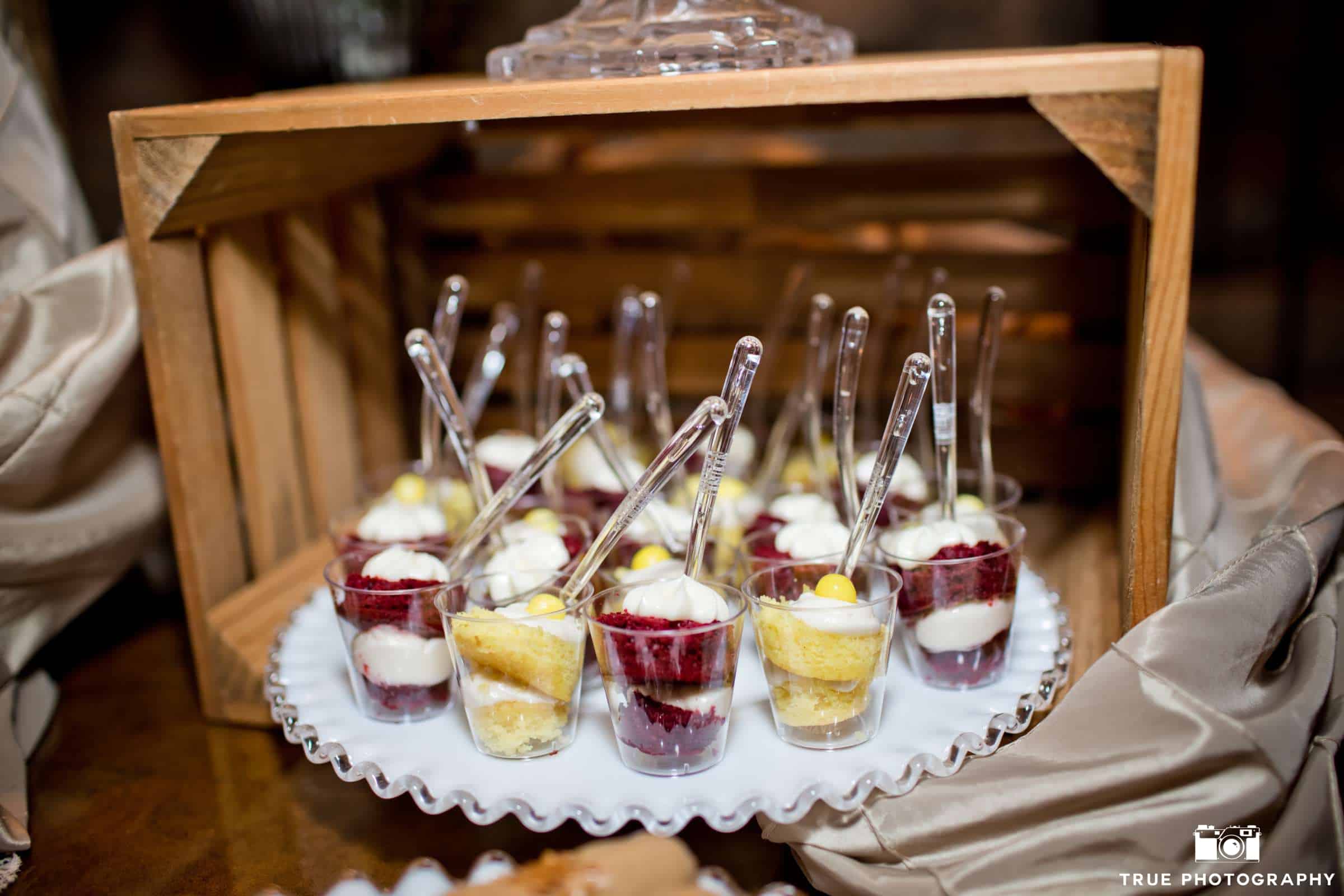
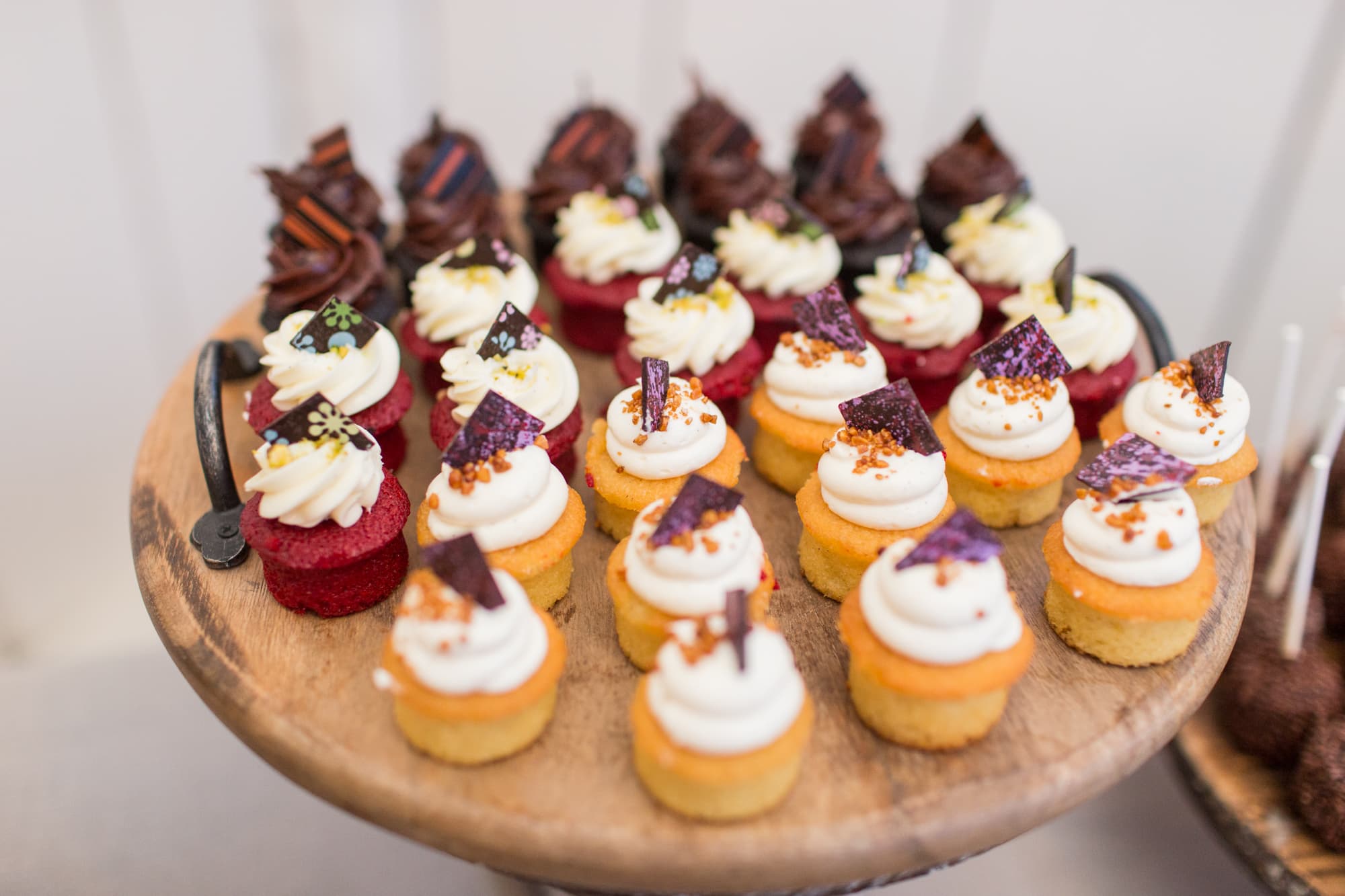
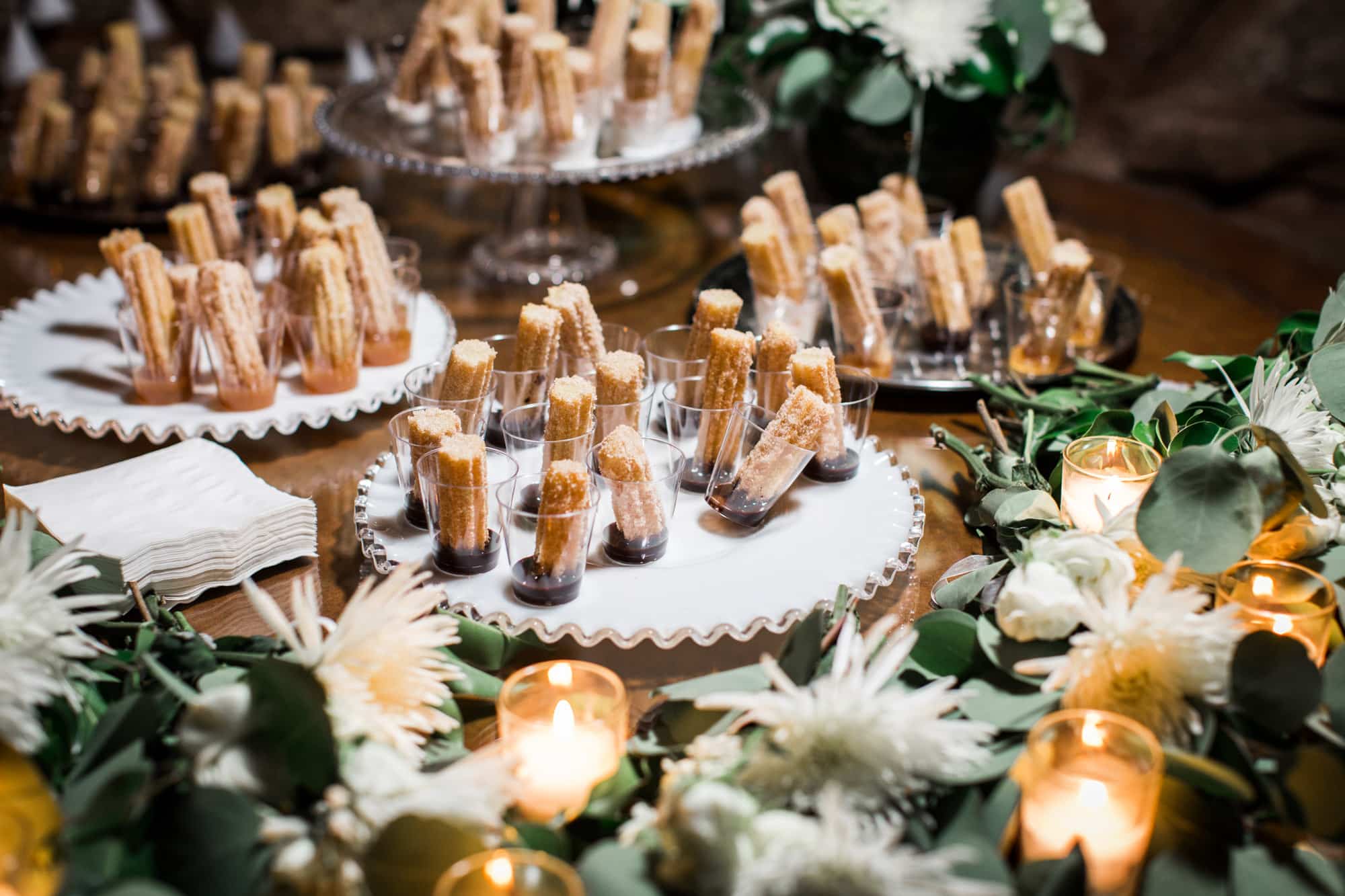
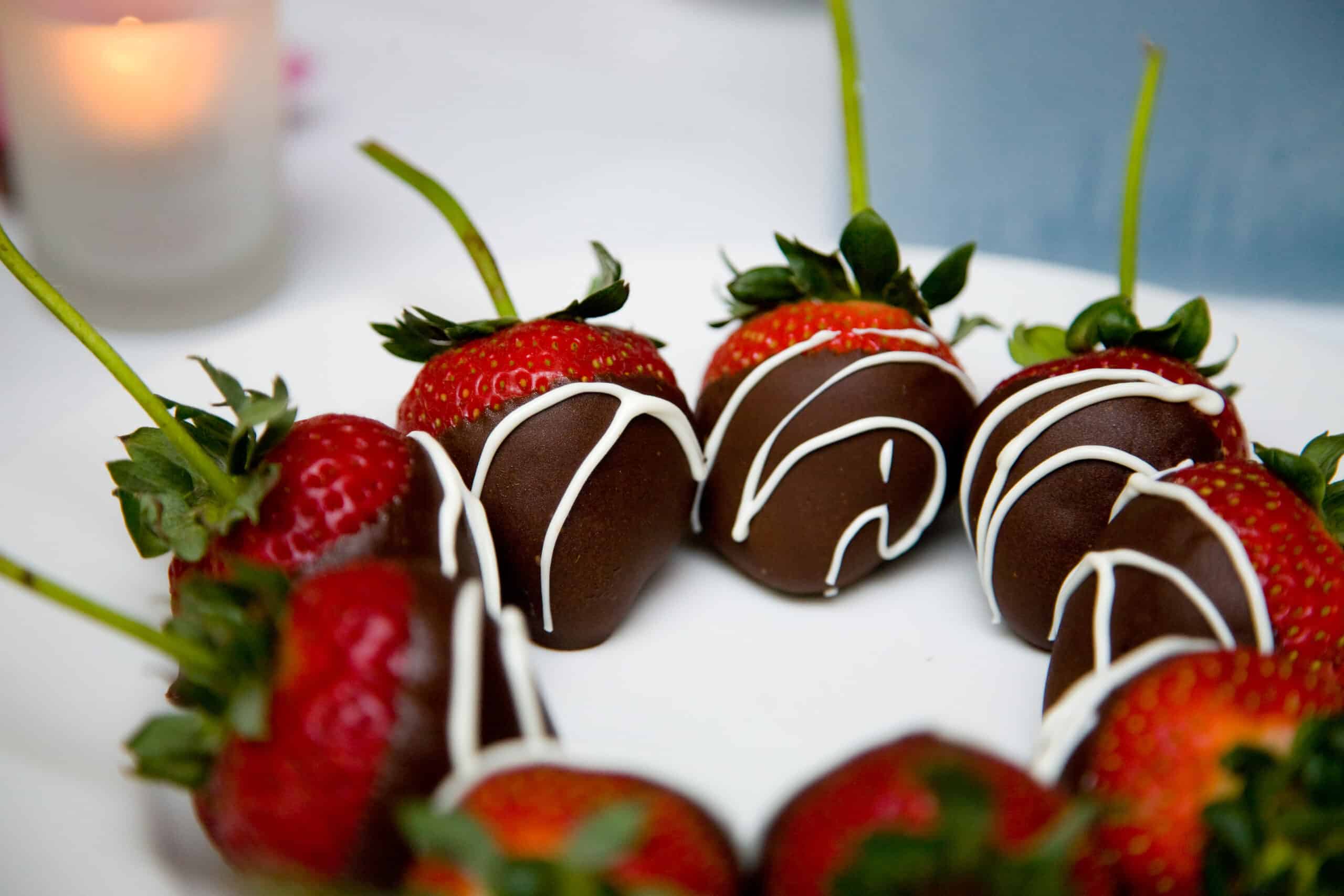
Small servings of full desserts: mini cheesecakes, brownie bites, lemon bars cut small, mousse cups, mini pies, churros, cake pops, and chocolate-dipped strawberries. The variety reads generous and gives guests the option to try several without committing to a full slice.
Pie Bar
Two to four whole pies displayed and sliced into small portions, plus mini hand pies or pie jars guests can grab. Pie bars are perfect for fall and winter weddings, Thanksgiving-adjacent corporate events, and rustic themes.
Hybrid: Wedding Cake Plus Dessert Bar
A small couple’s cake for the official cake-cutting moment, surrounded by an assortment of mini desserts. You get the photo and the tradition, plus the variety guests love. This is the most popular format we see for weddings now.
Dessert Bar Display Ideas
The display is half the appeal. A pile of identical platters on a flat table reads as flat. A layered display with varied heights, textures, and signage reads as intentional. A few principles that lift any setup:
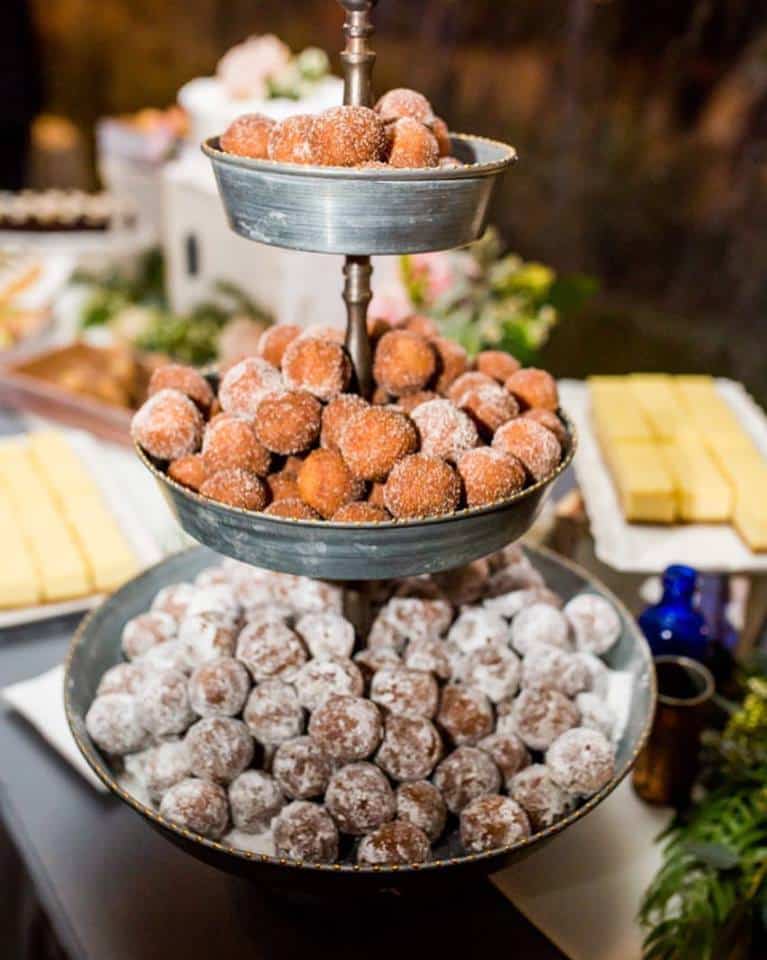
- Vary the heights. Use cake stands, risers, wooden crates, and stacked books to create three or four different elevation levels across the table.
- Mix vessels. Glass cake stands, ceramic platters, wooden boards, slate slabs, and glass cloches all together create texture and visual interest.
- Use a backdrop. A wall, signage, floral arrangement, or fabric backdrop behind the table anchors the display and frames photos.
- Label everything. Small cards or chalkboard signs naming each dessert help guests choose and flag allergens or dietary info. This is the single biggest hospitality win at any dessert bar.
- Light it. Soft lighting, candles, or string lights make the desserts glow and improve every photo guests take.
- Add florals. Small clusters of fresh flowers or greenery tucked between platters connect the dessert bar to the rest of the room. Many couples carry centerpiece elements onto the dessert table for cohesion. For more on this, see our guide on wedding and event centerpiece ideas.
- Provide the right tools. Tongs, small plates, cocktail napkins, and take-home boxes (for candy or cookies) all need to be at the table within reach.
How to Build a Dessert Bar Step by Step
If you are planning a dessert bar yourself or briefing a caterer, this is the sequence that works:
- Confirm guest count and event format. Plan dessert quantity around the actual headcount, then decide if it is a seated event or moving format.
- Pick your event theme or palette. The dessert bar should connect visually to the rest of the room. Color, texture, and vessel choices all flow from this.
- Choose four to six dessert types. Variety without chaos. Mix textures (chewy, creamy, crunchy) and flavors (chocolate, fruit, nut, vanilla).
- Plan two to three bites per guest. Mini desserts make this easy. A 150-guest event needs 300 to 450 total bites.
- Design the display. Map elevation, vessel mix, backdrop, and signage before order day.
- Order or bake. A bakery handles most of this for you. DIY only the easiest items (chocolate-dipped strawberries, decorated cookies) if you have the time.
- Set up at the venue. Allow 30 to 45 minutes for full setup, longer if doing a donut wall or large centerpiece.
- Position the bar strategically. Near the dance floor or visible from the main reception area. Not tucked in a corner.
Dessert Bar Ideas by Occasion
Different events call for different dessert bar choices. A few starting points by use case:
Wedding Dessert Bars
Wedding dessert bars usually emphasize variety and presentation. A small cutting cake plus an assortment is the most popular format. Color palette typically pulls from the wedding florals and linens. Mini desserts work well because guests can grab one while dancing or while heading toward the bar. For couples planning at our venue, the dessert bar fits naturally into our all-inclusive wedding package alongside our culinary team’s offerings.
Birthday Party Dessert Bars
Birthday dessert bars lean playful and personal. Pull the color scheme from balloons or signage. Include the guest of honor’s favorite treats as featured items. For kids’ birthdays, candy bars and cupcake bars tend to dominate. For adult birthdays, mini cheesecakes, macarons, chocolate truffles, and a small celebration cake work beautifully.
Corporate or Work Dessert Bars
Work events benefit from dessert bars that feel premium without feeling fussy. Pastry bars work well for breakfast meetings and brunch events. Cookie bars and brownie bites suit afternoon receptions. For holiday parties and end-of-quarter celebrations at our corporate event venue, the dessert bar replaces individual plating at the end of the night and keeps guests on their feet for networking.
Holiday and Seasonal Dessert Bars
Lean into the season. Pie bars work for fall. Hot cocoa stations paired with cookies suit winter. Fruit-forward mini tarts brighten spring events. Ice cream sundae bars stretch into summer celebrations.
Baby Shower and Bridal Shower Dessert Bars
Shower events almost always include some form of dessert bar, since the event itself is dessert and conversation focused. Macarons, mini tarts, dipped strawberries, and small frosted cookies in shower-themed colors set the tone. Add take-home favor bags so guests leave with a treat.
How Much Dessert Do You Need?
The most common dessert bar mistake is running out by the third hour. The second most common is having so much left over that someone has to box it all up at midnight. A practical guideline:
- Plan for 2 to 3 mini dessert bites per guest if dinner has already been served
- Plan for 3 to 4 bites per guest if the dessert bar is the main food event (a shower, afternoon reception, or cocktail-only party)
- Multiply by your guest count. 50 guests means 100 to 150 bites. 150 guests means 300 to 450 bites. 250 guests means 500 to 750 bites.
- Pick 4 to 6 dessert types so the variety reads abundant without becoming chaotic. Beyond seven types, guests get decision fatigue and the table looks crowded.
- Account for a small cutting cake if you are doing the wedding cake plus dessert bar hybrid, and reduce the mini bite count by 10 to 15 percent.
Dessert Bar Themes and Styles
The theme of your dessert bar should echo the rest of the event design. A few starting directions:
Rustic and Natural
Wood platters, kraft paper labels, mason jars for candy, hand-tied twine on take-home bags, and earthy florals. Pie bars and cookie bars suit this style. Colors lean neutral with one accent like deep red or burnt orange.
Modern and Minimalist
Clean white platters, geometric stands, and single-color desserts. Macarons in one color, white chocolate-covered strawberries, vanilla cake pops in matte white. Less is more. The repetition reads as intentional.
Coastal and Tropical
Soft blues and whites, sand-dollar shaped cookies, lemon bars, key lime tartlets, and coconut macaroons. Glass apothecary jars for shells filled with candy. Citrus garnish. At a waterfront venue, the harbor views do half the work.
Vintage
Glass cake stands, lace-edged platters, pastel candy in matching pastel jars, hand-lettered chalkboard signs, and antique linens under the display. Old-fashioned treats like pinwheel cookies, taffy, and homemade caramels.
Color-Themed Dessert Bars
Pick one or two colors from your event palette and let every dessert reflect them. Pink and gold weddings, navy and white corporate events, black and orange Halloween parties. The visual consistency makes the display read as a single piece of decor, not a random collection.
Practical Dessert Bar Tips From Experience
A few things that consistently make or break a dessert bar in practice:
- Open the bar at the right time. Not immediately after dinner. Let guests dance for 30 to 45 minutes, then open it. The break in dancing draws everyone to the table and creates a second wave of energy.
- Don’t refrigerate everything. Some desserts taste better at room temperature. Cookies, brownies, and pies hold up beautifully. Only chill what genuinely needs it (cream-based items, mousses, ice cream).
- Pre-portion the labor-intensive items. Slicing a whole pie in front of 150 guests creates a line. Pre-cutting and arranging it on a platter eliminates the bottleneck.
- Plan for take-home. Provide small boxes or bags so guests can take desserts with them. Reduces waste, gives guests a parting gift, and frees you from packing leftovers at midnight.
- Label allergens clearly. Even a small “contains nuts” or “gluten-free” tag turns a potentially anxious guest into a happy one.
- Refresh, don’t overload. Set out half the desserts initially. Replenish at the midpoint. The display always looks fresh, never picked over.
Dessert Bars at Harbor View Loft
Dessert bars work especially well at our venue because the property gives you natural places to stage one. A long table along the windows with the harbor behind it. The wraparound balcony for an outdoor dessert station at sunset. Or a corner of the main floor near the dance floor where the bar becomes part of the evening’s flow.
Our in-house culinary team handles dessert bar planning alongside the main menu for every event we host. Variety, timing, presentation, and quantity all get planned together with your wedding or event coordinator. If you are working in a reception style format with food stations throughout the night, the dessert bar slots in naturally as the final station of the evening. Browse setup examples in our highlights gallery.
Frequently Asked Questions
What is a dessert bar?
A dessert bar is a self-serve table or station at an event featuring an assortment of different sweets, displayed together on platters, risers, and stands. Guests choose what they want from four to ten options rather than receiving a single plated dessert.
How many desserts per person for a dessert bar?
Plan for two to three mini dessert bites per guest if dinner has been served, or three to four bites per guest if the dessert bar is the main food focus of the event. For a 150-guest wedding, that means 300 to 450 total bites spread across four to six dessert types.
What is the difference between a dessert bar and a dessert table?
The terms are mostly used interchangeably. A dessert table tends to imply a single flat surface with desserts displayed across it. A dessert bar implies more variety, often with vertical elements like donut walls, tiered stands, and signage that make the display feel like a small destination within the event.
How do you set up a dessert bar?
Start with the table or surface, add a backdrop or signage behind it, position varied-height risers and stands, place platters with the heaviest items in the middle and lighter items along the edges, label each dessert, and finish with florals or candles for warmth. Total setup time runs 30 to 45 minutes for most formats.
How much does a dessert bar cost?
Costs vary based on dessert type and guest count. Mini desserts typically run $2 to $6 per bite when ordered from a bakery, meaning a 150-guest event with 400 bites lands in the $800 to $2,400 range for the food itself. Display rentals (stands, platters, donut walls) add $100 to $500 depending on scale.
Can you have a dessert bar instead of a wedding cake?
Yes, and many couples do. The most popular approach is a hybrid: a small couple’s cake for the official cake-cutting moment, surrounded by an assortment of mini desserts. This gives you the traditional photo opportunity and the variety guests love, without the cost or waste of a large multi-tier cake.
What are some good dessert bar themes?
Rustic with wood platters and earthy tones, modern with clean white display vessels and monochromatic desserts, coastal with citrus and soft blues, vintage with glass cake stands and pastel jars, color-themed pulling from the event palette, and seasonal themes like fall pie bars or summer ice cream stations. The theme should connect visually to the rest of the event design.
What desserts work best for a dessert bar?
Mini cheesecakes, brownie bites, decorated cookies, macarons, cake pops, mini tarts, chocolate-dipped strawberries, donut holes, mini pies, lemon bars, churros, and cupcakes all hold up well at room temperature and travel cleanly to guest plates. Combine three to four sturdy items with one or two more delicate options like mousse cups or cream puffs.
Planning a Dessert Bar at Harbor View Loft
If you are planning a wedding, party, corporate event, or shower at Harbor View Loft, we can walk you through dessert bar design alongside the rest of your menu and decor. Contact us to schedule a tour and start the conversation.
